In our busy modern lives we need to stay flexible & agile to remain healthy & active. Yoga provides a complete method for improving both of these qualities and works well for people at any stage of life. You might want to move more easily or feel less stiff or simply increase how far your body can stretch. Yoga gives you straightforward but effective poses that help everyone. This article presents five important yoga poses that will boost your flexibility and agility regardless of how old you are. These poses work because they gently stretch your muscles and joints while building strength at the same time. Regular practice helps your body become more responsive and coordinated. You don’t need special equipment or a gym membership to get started. All you need is a quiet space and a few minutes each day to practice these movements. The beauty of yoga is that you can adapt each pose to match your current ability level. Beginners can start with modified versions while more experienced practitioners can deepen the stretches. The key is consistency rather than perfection. Even short daily sessions will produce noticeable improvements in how your body moves & feels over time. Let’s explore these five fundamental poses that can transform your physical capabilities.
Downward Dog (Adho Mukha Svanasana)
Downward Dog stands as one of the most popular yoga poses for building flexibility. This position stretches your hamstrings along with your calves and back. At the same time it strengthens your arms and shoulders and core muscles. The pose works to improve how far you can move your hips and knees and shoulders. These areas play a key role in keeping your body agile and flexible over time.
How to do it:
– Start on your hands and knees, with your wrists aligned under your shoulders and your knees under your hips.
– Press into your palms and lift your hips towards the ceiling, forming an inverted “V” shape with your body.
– Keep your feet hip-width apart, and press your heels toward the floor while keeping your legs straight.
– Hold the pose for 30 seconds to a minute, focusing on your breath and deepening the stretch with each exhale.
Cat-Cow Stretch (Marjaryasana-Bitilasana)
How to do it:
– Start on your hands and knees, with your wrists under your shoulders and knees under your hips.
– Inhale as you arch your back (Cow Pose), dropping your belly toward the floor and lifting your head and tailbone toward the sky.
– Exhale as you round your spine (Cat Pose), drawing your belly button toward your spine and tucking your chin toward your chest.
– Repeat this movement for 10-15 rounds, breathing deeply with each movement.
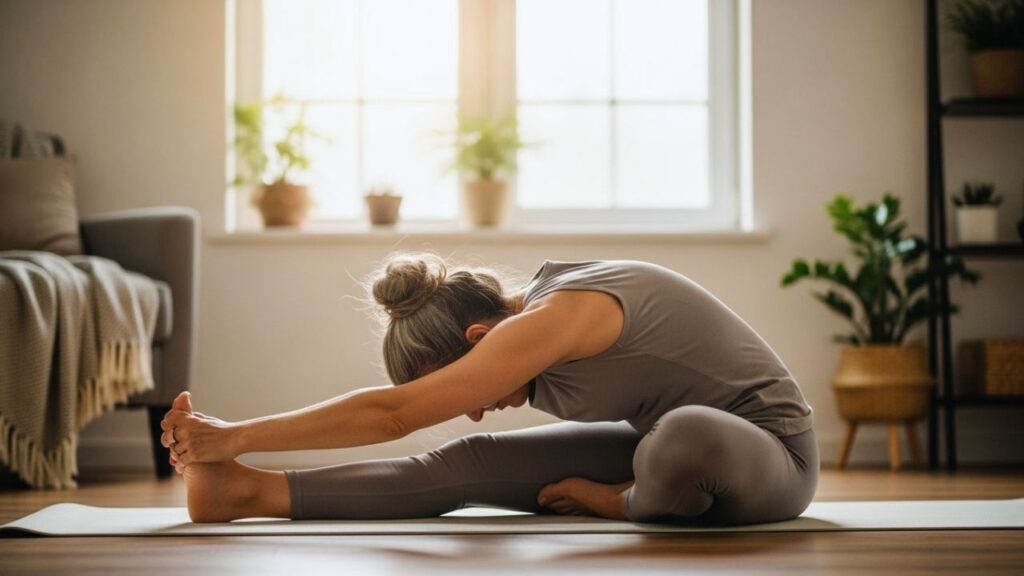
Seated Forward Fold (Paschimottanasana)
How to do it:
– Sit on the floor with your legs extended straight in front of you.
– Inhale and lengthen your spine, reaching your arms overhead.
– As you exhale, hinge forward at your hips, keeping your back straight and reaching for your feet, ankles, or shins.
– Hold the stretch for 30 seconds to a minute, breathing deeply and relaxing into the pose with each exhale.
Lunge Pose (Anjaneyasana)
The Lunge Pose works on your hip flexors and the muscles in your thighs. This exercise helps make your legs more flexible and stronger. It also helps you balance better and stay stable on your feet. These benefits are important for staying active and moving well as you get older.
How to do it:
– Start in a standing position, then step one foot back and lower your back knee to the floor.
– Ensure your front knee is aligned over your ankle and your hips are squared.
– Inhale and lift your chest, reaching your arms overhead to stretch the upper body.
– Hold the stretch for 30 seconds, then switch sides.
Child’s Pose (Balasana)
Child’s Pose is a gentle resting position that stretches your lower back along with your hips and thighs. This pose helps you relax & works well for reducing stress and tension in your body. It offers a great option for people who want to become more flexible without putting too much strain on their muscles and joints.
How to do it:
– Start by kneeling on the floor with your big toes touching and knees spread apart.
– Sit back onto your heels and extend your arms forward, lowering your chest toward the floor.
– Rest your forehead on the mat and breathe deeply, allowing your body to relax into the pose.
– Stay in Child’s Pose for 1-2 minutes, focusing on releasing tension in your back and shoulders.