
Building full-body strength doesn’t always require heavy equipment or a gym membership. Yoga provides a simple yet highly effective way to strengthen the entire body using only your own body weight. When practiced regularly at home, yoga improves muscle tone, balance, posture, and endurance while staying gentle on the joints. These six yoga poses engage multiple muscle groups at the same time, making them ideal for developing complete body strength in a safe and sustainable way.
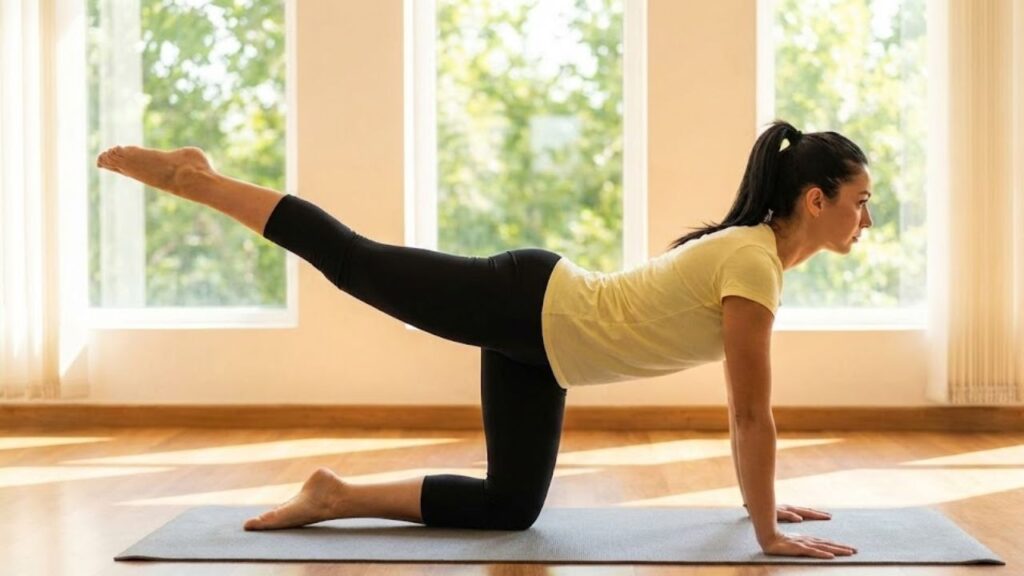
Plank Pose for Core and Upper Body Strength
Plank Pose stands out as an excellent yoga position for strengthening your entire body. Start by positioning yourself on your hands and toes while maintaining a straight line from your head down to your heels. Tighten your core muscles and thighs while keeping your shoulders steady and stable. This position works multiple muscle groups at once including your abdominals and arms along with your shoulders and back and legs. When you practice Plank Pose on a regular basis you will notice improvements in your posture & balance as well as deeper core strength that helps with daily activities and overall stability.

Warrior Pose for Lower Body Power
Warrior Pose builds strength in the legs, hips, and glutes while also engaging the arms and core. Step one foot forward, bend the front knee, and keep the back leg strong and extended. Raise your arms overhead or stretch them outward, keeping your chest open and spine tall. This pose strengthens major muscle groups and improves stamina. Regular practice develops functional strength that supports walking, lifting, and daily activities.

Downward Facing Dog for Strength and Stability
Downward Facing Dog combines strength with gentle stretching. From hands and knees, lift your hips upward to form an inverted V shape. Press firmly through your palms and engage your arms, shoulders, thighs, and core. This pose strengthens the upper body, legs, and core while improving circulation and joint stability. Consistent practice builds endurance and supports overall body balance.

Chair Pose for Leg and Core Strength
Chair Pose is highly effective for strengthening the thighs, glutes, and core muscles. Stand with your feet together, bend your knees as if sitting back into a chair, and lift your arms overhead. Keep your chest upright and weight balanced in your heels. This pose improves lower-body strength, balance, and core engagement without placing stress on the joints.
Bridge Pose for Glutes and Lower Back Support
# Bridge Pose
Bridge Pose builds strength in your glutes & lower back while engaging your core muscles. Start by lying flat on your back and bend your knees so your feet rest firmly on the floor. Push down through your feet and raise your hips toward the ceiling while tightening your glute muscles. This exercise helps maintain proper spinal alignment & boosts blood flow throughout your body. It also builds up the muscles that support and protect your lower back from injury. Bridge Pose works particularly well for people who spend most of their day sitting down since it targets the exact muscles that become weak from extended periods in a chair.
Cobra Pose for Spine and Upper Back Strength
Cobra Pose focuses on strengthening the spine, shoulders, and upper back. Lie on your stomach with your palms under your shoulders and gently lift your chest off the floor. Keep your hips grounded and elbows slightly bent. This pose improves posture, increases back strength, and opens the chest, helping to reduce slouching and upper-body tension.

Why Yoga Is Effective for Full-Body Strength
# Building Strength Through Home Yoga Practice
Yoga develops physical strength in a fundamentally different way than traditional weightlifting. Rather than loading muscles with external resistance, yoga uses your own body weight combined with deliberate movements and extended position holds. This method creates strength that feels natural and sustainable over time. The practice works by engaging multiple muscle groups simultaneously instead of targeting single muscles in isolation. When you hold a plank position or move through a warrior sequence, your entire body must coordinate its effort. Your core stabilizes your spine while your legs support your weight and your arms maintain proper positioning. This integrated approach builds strength that translates directly into everyday activities like carrying groceries or climbing stairs. Home practice offers distinct advantages for strength development. Without the pressure of keeping pace with a class you can spend extra time refining your alignment in each pose. Proper form ensures that the right muscles engage effectively while protecting your joints from unnecessary strain. You can repeat challenging positions until you feel confident in your technique. The sustained holds characteristic of yoga create a specific type of muscular endurance. Holding chair pose for thirty seconds demands that your quadriceps maintain continuous tension without rest. This builds stamina within the muscle fibers and trains them to work efficiently under prolonged stress. Over weeks and months, positions that once felt impossible become manageable as your muscles adapt & strengthen. Joint health improves alongside muscular strength in yoga practice. The controlled movements take your joints through their full range of motion while muscles provide active support. This combination maintains joint flexibility while building the surrounding tissue strength needed to protect against injury. Unlike high-impact activities that can wear down cartilage over time, yoga strengthens the structures around your joints without excessive force. Consistency becomes easier with home practice because you eliminate travel time and scheduling conflicts. Even fifteen minutes of focused practice several times per week produces measurable strength gains. The low barrier to entry means you can maintain your practice through busy periods when getting to a studio would be impossible. The progressive nature of yoga allows continuous strength development regardless of your starting point. Beginners might modify downward dog by bending their knees while advanced practitioners can lift one leg for added challenge. Each pose contains multiple variations that let you adjust the intensity to match your current capacity while still working toward greater strength. This approach to strength building proves particularly valuable for long-term physical health. The balanced development prevents the muscular imbalances that sometimes result from conventional strength training. Your body becomes both strong and mobile, capable of moving efficiently through various activities without restriction or discomfort.
How to Practice Safely at Home
Start with a light warm-up and breathe steadily while doing each pose. Keep each position only as long as you can do it correctly. Take breaks whenever you need them and do not push your body too hard. Doing yoga when your stomach is empty or you have eaten only a little can help you feel better and concentrate more easily.
# Building Full-Body Strength Through Yoga
Developing strength throughout your entire body requires regular practice with proper attention to form. The following six yoga poses create a well-rounded routine you can perform in your own home. When practiced consistently these poses build a strong and stable body while improving flexibility & sharpening both physical awareness & mental concentration. Yoga offers a practical approach to fitness that works for people at different skill levels. Unlike exercises that isolate specific muscles these poses engage multiple muscle groups simultaneously. This integrated approach means you develop functional strength that translates to everyday movements and activities. The beauty of this routine lies in its simplicity. You need minimal space and no special equipment beyond a yoga mat. Each pose challenges your body in distinct ways while contributing to overall strength development. Some poses focus on upper body strength while others target the core or lower body. Together they form a complete workout system. Regular practice brings noticeable changes over time. Your muscles become stronger and more defined. Your balance improves as stabilizing muscles develop. Flexibility increases gradually as you hold poses & breathe through mild discomfort. Mental focus sharpens because yoga demands present-moment awareness of body position and breath. Starting a home yoga practice requires commitment but not perfection. Begin with shorter sessions and gradually extend your practice time as your body adapts. Pay attention to proper alignment in each pose rather than pushing for depth or duration. Quality of movement matters more than quantity of repetitions. These six poses work together as a system. Each one prepares your body for the next while addressing different aspects of strength and stability. The sequence flows naturally & can be completed in a reasonable timeframe. This makes it sustainable as a regular practice rather than an occasional workout. Consistency proves more valuable than intensity when building strength through yoga. Practicing three or four times weekly produces better results than sporadic intense sessions. Your body needs time to adapt and recover between practices. This steady approach prevents injury while allowing continuous progress.
