The first time someone suggested pouring vinegar on my car’s windshield, I honestly thought they were joking. It was a cold March morning, a thin layer of greasy grime blurring everything, and my wipers were just smearing the mess like butter on burnt toast. At the gas station, between coffee and lottery tickets, an older guy in a blue mechanic’s jacket leaned over and said, “You know, a little white vinegar would fix that.” I nodded politely, the way you do when a stranger offers life advice, and promptly ignored him. It sounded too cheap. Too simple. Too… kitchen.
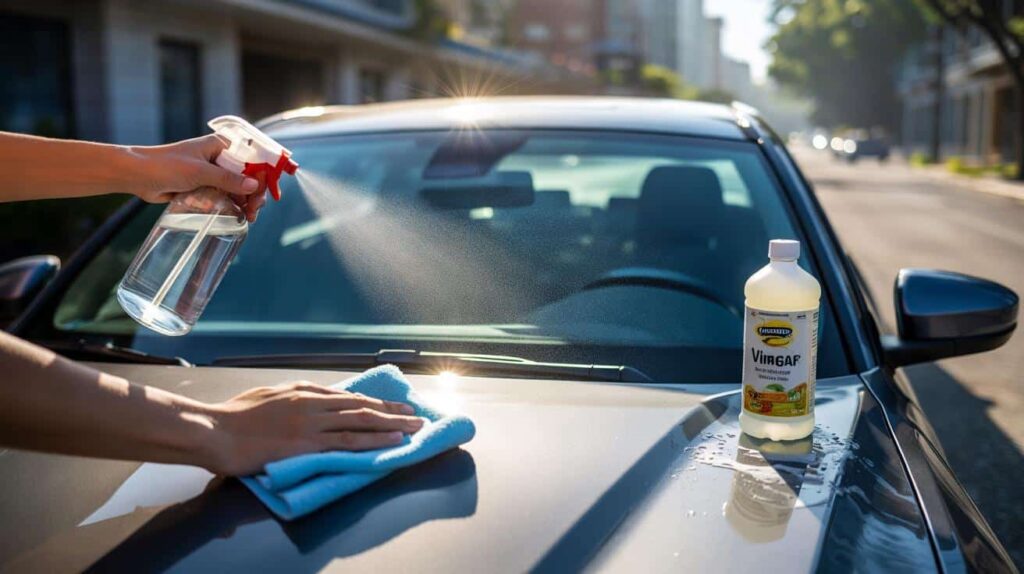
Weeks later, stuck behind a rain-streaked windshield that wouldn’t clear, I finally tried it.
That’s when things got interesting.
Why cleaning pros quietly swear by vinegar on glass
Once you’ve seen a truly clean windshield, it’s hard to unsee the difference. The reflections are sharper, the night glare drops, and the world suddenly looks like it’s shot in high definition instead of on an old phone camera. Professional cleaners know this feeling well. They’ll tell you that glass is one of those surfaces that looks “okay” until you realize how much haze you’ve been ignoring.
Vinegar has become a kind of quiet secret in that world. Cheap, slightly smelly, sitting in your pantry, and yet powerful enough to cut through the oily film your wipers just slide over. It doesn’t have the satisfying blue color of regular glass cleaner. It just works.
Ask any auto detailer what really lives on a windshield and you’ll get a slightly horrifying list. Traffic pollution, exhaust residue, road salt, wax overspray, washer fluid additives, fingertip grease from when you adjusted the rear-view mirror. On sunny days you notice the streaks. At night, it turns into starburst halos around every headlight.
One cleaner I spoke with told me about a client who thought his night vision was failing. He’d stopped driving after dark. “We did one deep clean with a vinegar solution,” she said, “and he called me the next day, actually laughing. He thought we’d changed his eyes.” That sounds dramatic, but if you’ve ever wiped off a seriously dirty screen, you know the feeling.
The science behind it is less dramatic and more quietly logical. Vinegar is essentially dilute acetic acid. Glass doesn’t care about it, but mineral deposits, salts, and many oily residues do. The acid breaks down those invisible layers that standard soap and water often just push around. That’s why wipers seem useless when the glass is coated: the blades are gliding over a thin film, not the actual surface.
Commercial glass cleaners often rely on detergents and alcohols. They’re fine for quick jobs. Vinegar’s strength is in cutting through that built-up film that’s been baking in the sun for months. **Less residue left behind means less glare later.**
How to use vinegar on your windshield without making a mess
The method that cleaning experts repeat again and again is simple. Mix equal parts white distilled vinegar and water in a spray bottle. Some pros go stronger, up to two-thirds vinegar for really grimy glass, but a 50/50 mix is enough for most daily cars. Use cold or room-temperature water, not hot; you’re cleaning, not cooking.
Park your car in the shade and let the windshield cool. Spray the solution directly onto the glass, then let it sit for 30–60 seconds. That pause is when the vinegar does its quiet work, softening and dissolving the film. Then wipe with a clean microfiber cloth using straight, overlapping strokes. Finish with a second dry cloth to buff it crystal clear.
This is where most people stumble: they use paper towels, dirty rags, or the shirt they’re already wearing. The result is lint, new streaks, and a faint sense that the whole exercise was pointless. We’ve all been there, that moment when you step back, squint at the glass, and realize it looks… worse.
Detailers almost always reach for microfiber. It grips grime instead of pushing it. They’ll also tell you to clean the inside of the windshield too, because plastic off-gassing from dashboards creates a greasy film that amplifies nighttime glare. Let’s be honest: nobody really does this every single day. Still, once every few weeks can dramatically change how safe and relaxed you feel behind the wheel.
Some drivers worry vinegar will damage their car. Here’s where the experts get very specific. They don’t spray it on hot glass, they don’t soak rubber seals, and they don’t leave puddles sitting on the paint. Used with a light hand, it’s as harmless as any glass cleaner.
“Vinegar gets a bad reputation because of the smell,” says Laura M., a professional auto detailer who cleans high-end cars in all seasons. “But the smell disappears in minutes. The clarity lasts for weeks.”
To keep things simple, pros often break the method down into a small mental checklist:
- Spray 50/50 vinegar-water only on cool glass
- Let it sit briefly so the film softens
- Wipe with one clean microfiber cloth, dry with another
- Avoid soaking rubber, screens, or painted surfaces
- Finish with wiper blades: wipe them with the same solution
*Once you’ve done this a couple of times, it becomes a five-minute ritual you don’t really think about, like brushing your teeth before bed.*
What vinegar on your windshield quietly changes
Something shifts the first time you drive at night after a proper vinegar clean. Oncoming lights look sharper but less aggressive. Rain beads move differently, wiping away with fewer ghostly streaks. Your shoulders relax a little. That’s the part experts can’t quite measure but talk about anyway: the mental load of driving when you’re fighting your own glass.
There’s also a small satisfaction in using something humble and familiar. No specialized $20 spray bottle, just a pantry staple doing double duty. For some people, that’s the real appeal. Low effort, low cost, high impact.
| Key point | Detail | Value for the reader |
|---|---|---|
| Vinegar dissolves invisible film | Acidic action breaks down grime, salts, and oily residue | Clearer view, less glare, safer driving |
| Right method matters | 50/50 mix, cool glass, microfiber cloths, short dwell time | Streak-free result without damaging surfaces |
| Low-cost, repeatable habit | Uses cheap white vinegar and basic tools you already own | Professional-level clarity without professional prices |
FAQ:
- Can vinegar damage my windshield?Used diluted on cool glass and wiped off promptly, white vinegar doesn’t harm automotive glass. Just avoid soaking rubber seals or painted areas.
- Will the vinegar smell stay in my car?The smell is sharp at first but fades quickly, usually within a few minutes of airing out the car or driving with windows slightly open.
- Can I use vinegar on tinted windows?On factory-tinted glass, it’s generally fine. On aftermarket tint film, many installers advise alcohol-free, ammonia-free cleaners, so check your tint warranty first.
- How often should I clean my windshield with vinegar?For most drivers, once every two to four weeks is enough. Heavy commuters or people in dusty or salty areas may benefit from weekly cleaning.
- Can I put vinegar directly in my washer fluid reservoir?Experts usually don’t recommend that. It can affect rubber components over time. Use vinegar only for manual cleaning on the outside of the car.