The first signs of cracked heels often appear as tiny white lines stretching across your skin, like a dried riverbed. At first, you might dismiss them, thinking they came from walking barefoot indoors or wearing new sandals. But over time, these cracks can deepen. You may notice a sting or slight pull when you step out of bed. Socks might even catch on the rough edges. It’s a subtle signal that your feet are craving attention and care, reminding you that neglected skin eventually calls for action.
Understanding the Cause of Dry Heels
Your heels endure more stress than most parts of your body. They absorb impact every time you walk or run and bear your weight during long days. Yet, they often go unnoticed because they remain covered and hidden. Dry, cracked skin usually develops when heels face constant pressure and friction without adequate moisture. Wearing shoes with thin soles or open backs, walking on hard surfaces, or spending time in heated indoor environments can all contribute. Even long hot showers or cold weather can sap natural oils, leaving your thick protective heel skin less flexible and prone to splitting.

Simple Kitchen Remedies for Healing
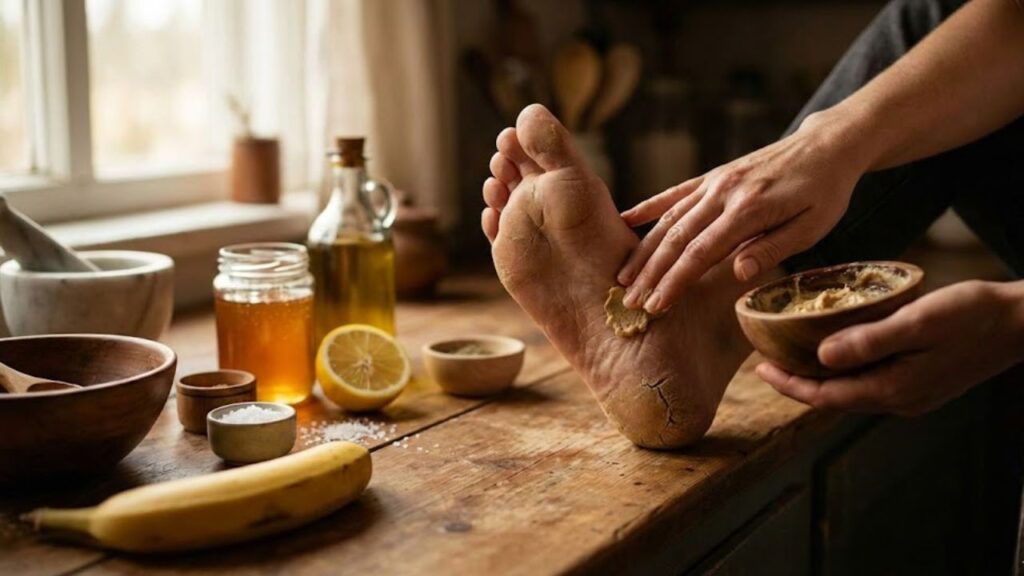
You don’t need expensive creams to restore heel health. Many common kitchen ingredients can help. Olive oil and coconut oil deeply hydrate and soften rough skin. Honey attracts moisture and soothes irritation, while milk or yogurt gently loosen dead skin. Combining sugar or salt with oil creates a mild exfoliating scrub that smooths uneven texture. Even nutrient-rich fruits like banana or avocado provide deep nourishment. Using familiar items from your pantry turns foot care into a relaxing ritual, helping your heels recover naturally and comfortably over time.

A Gentle Evening Routine
Transforming heel care into a calming evening practice makes a noticeable difference. Start with a warm milk and salt soak for 10–15 minutes, adding a splash of oil to restore moisture. Follow with a gentle sugar or salt scrub to remove dry skin, then apply a honey and yogurt mask for deep hydration. Finish with an overnight oil treatment under cotton socks to lock in softness. These simple steps, practiced consistently, gradually relieve discomfort and promote smoother, healthier skin, allowing your feet to support you more comfortably throughout daily life.

Table: Common Ingredients and Their Benefits for Heels
| Ingredient | Heel Care Benefit | Recommended Use |
|---|---|---|
| Olive Oil / Coconut Oil | Hydrates deeply, softens hardened skin | Massage at night or use in scrubs |
| Honey | Locks in moisture, calms irritation | Mix with milk or oil for a mask |
| Milk / Yogurt | Softens flaky skin naturally | Use in foot soaks or creamy packs |
| Sugar / Salt | Exfoliates rough layers, smooths texture | Apply as scrub after soaking feet |
| Banana / Avocado | Provides vitamins and healthy fats | Use as thick hydrating mask |
Maintaining Healthy Heels
Once your heels recover, simple habits keep them healthy. Apply moisturizer daily, avoid extremely hot showers, rotate shoes, and stay hydrated. Treat dry patches immediately to prevent deep cracks. If cracks persist, bleed, or worsen, consult a podiatrist to rule out underlying issues. With consistent care using warmth, oils, and household ingredients, your feet can stay comfortable and resilient, ready to support your daily routines without discomfort.