The floor feels cool against your forearms while your toes press into the mat. Your legs tighten and your breathing becomes steady. As you feel the tension in your core and concentrate your mind you might wonder how long you should hold this plank. Whether you find it easy at 18 or difficult at 68 your core strength is the hidden foundation that protects your spine & helps you move. The right amount of time to hold a plank depends on knowing your body’s current condition & respecting its limits without going too far into pain.
The Hidden Strength Inside Your Core
Unlike noisy and intense workouts planks are quiet exercises. You arrange your body in one straight line with your shoulders positioned above your elbows or wrists while your heels extend backward & your head stays naturally aligned. The movement looks easy from an outside view but your body works hard internally. Your deep core muscles activate as the transverse abdominis tightens around your midsection while the multifidus supports your spine. Your diaphragm matches your breathing with physical effort and your pelvic floor provides stability from below. The quality of your plank matters more than how long you hold it. A twenty-second plank with proper form delivers better core activation & remains safer than a one-minute plank where your body sags and loses alignment.

Why Longer Planks Aren’t Always Better
Fitness culture tends to celebrate extreme achievements like two-minute holds and viral endurance challenges that push bodies to their limits. However holding a plank for a long time mainly teaches you to tolerate discomfort rather than building real strength. Shorter planks performed with good form and done regularly actually deliver better results for your spine and core muscles. Extended planks are not necessarily dangerous but they offer less value over time and tired muscles can lead to poor form. Eventually the question changes from asking how long you can hold a position to asking how well you can support your body right now.

How Planks Should Change With Age
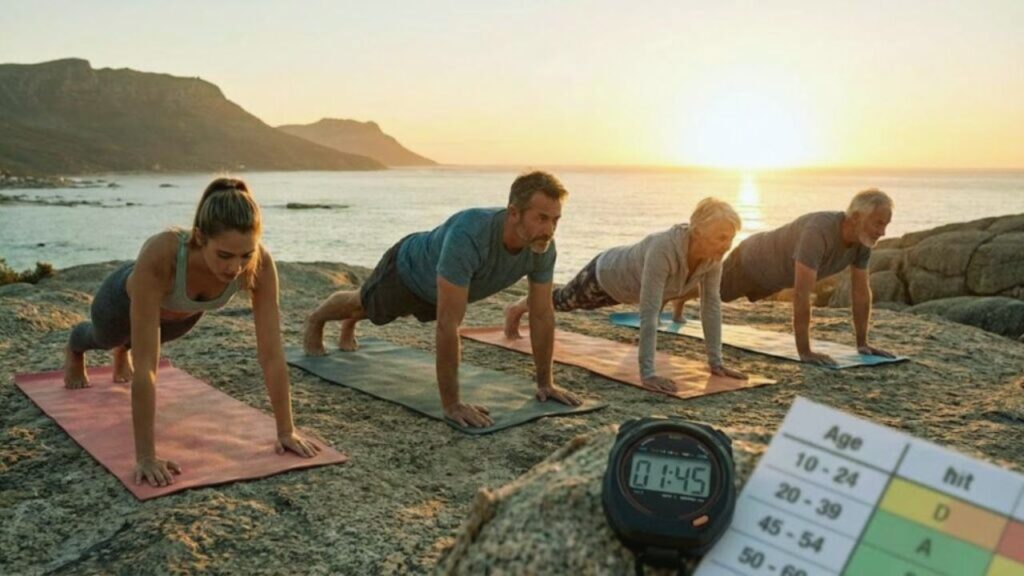
Adjusting Your Plank as You Get Older When you get older your body takes longer to bounce back and your muscles and joints become less flexible. A plank exercise that used to feel easy might now require more focus and control because your balance and coordination naturally change with age. The key is to adjust how long you hold the position based on how well you can maintain proper form. Stop the exercise right before your body alignment begins to break down. Here are some general recommendations for healthy adults:
 These Are the 3 Haircuts London Stylists Say Clients Are Requesting More Than Ever Right Now
| Age Range | Suggested Hold Time (per set) | Sets | Weekly Frequency |
|---|---|---|---|
| Teens (13–19) | 20–40 seconds | 2–4 | 2–4 days/week |
| 20s–30s | 30–60 seconds | 2–4 | 3–5 days/week |
| 40s | 20–45 seconds | 2–4 | 3–4 days/week |
| 50s | 15–40 seconds | 2–3 | 2–4 days/week |
| 60s–70s+ | 10–30 seconds | 2–3 | 2–4 days/week |