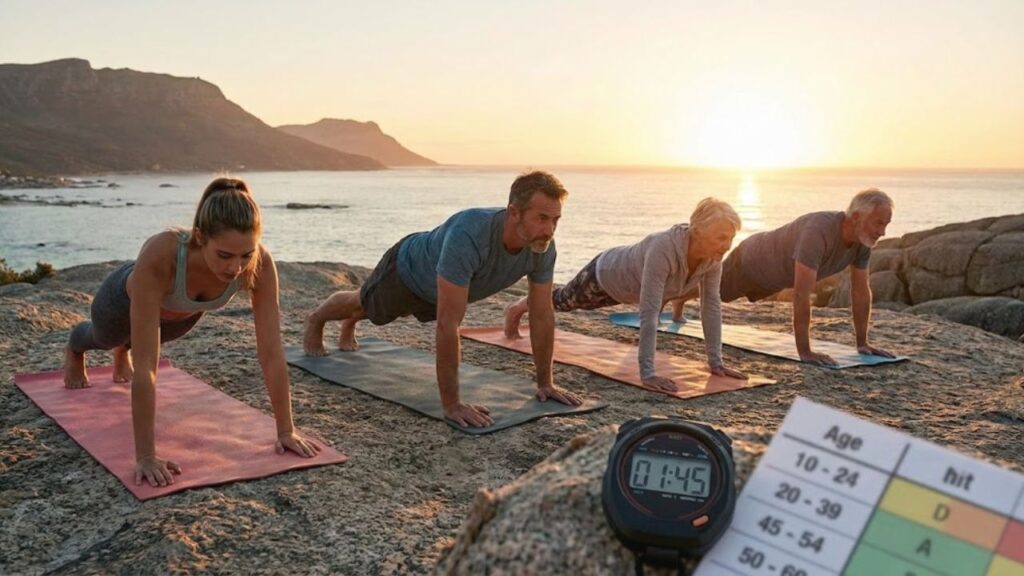
The cool floor presses against your forearms as your toes anchor into the mat. Your legs engage, and your breathing settles into a steady rhythm. Amid the tension in your core and the focus of your mind, the question emerges: “How long should I hold this plank?” Whether it feels easy at 18 or challenging at 68, your core strength remains the hidden foundation that protects your spine and supports movement. The right plank duration depends entirely on understanding your body’s current state and respecting its limits without pushing into pain.
The Subtle Power Within Your Core
Unlike loud, high-intensity workouts, planks arrive quietly. You line your body in a single, long shape: shoulders over elbows or wrists, heels reaching back, head aligned effortlessly. From the outside, it seems simple, but inside, a quiet storm is at work. Deep stabilizers engage: the transverse abdominis cinches the midsection, the multifidus protects the spine, the diaphragm coordinates breath with effort, and the pelvic floor anchors support. Quality matters more than time. A twenty-second, well-aligned hold often surpasses a collapsing one-minute plank in both core engagement and safety.

Why Long Planks Aren’t Always Better
Fitness culture often glorifies extremes: two-minute holds, viral endurance challenges, and shaking bodies fueled by determination. In reality, longer planks increase discomfort tolerance rather than meaningful strength. Short, precise holds repeated consistently provide greater benefit to spinal stability and core health. While extended planks aren’t inherently harmful, their return diminishes, and the risk of fatigue-related misalignment grows. Over time, the focus shifts from “How long can I last?” to “How well can I support my body today?”
Adjusting Planks With Age
As the body ages, recovery slows and tissues become less forgiving. A plank that once felt effortless may now demand more intentional control, reflecting the natural changes in balance and coordination. Flexible ranges help you match hold time to form: stop just before alignment starts to falter. General guidelines for healthy adults are:
 Goodbye Hair Dye for Grey Hair: The Simple Conditioner Add-In That Restores Natural Colour Gradually
| Age Range | Suggested Hold Time (per set) | Sets | Weekly Frequency |
|---|---|---|---|
| Teens (13–19) | 20–40 seconds | 2–4 | 2–4 days/week |
| 20s–30s | 30–60 seconds | 2–4 | 3–5 days/week |
| 40s | 20–45 seconds | 2–4 | 3–4 days/week |
| 50s | 15–40 seconds | 2–3 | 2–4 days/week |
| 60s–70s+ | 10–30 seconds | 2–3 | 2–4 days/week |
Your 20s and 30s: Strong and Capable
During your 20s and 30s, recovery is rapid, tissues resilient, and strength abundant. Planks of thirty to sixty seconds are ideal for core building. The main challenge is subtle form breakdown: hips dipping, shoulders creeping, or lower back tension. Dividing effort into shorter, high-quality holds yields better results than one long, exhaustive attempt, ensuring consistent spinal support.

Your 40s: Awareness and Precision
By the 40s, stiffness and old injuries often surface. Strength remains, but it requires mindful attention. Most productive plank durations range from twenty to forty-five seconds. On some days, you may hold longer; on others, stopping earlier is wiser. The key is sustainable core engagement that preserves posture, movement quality, and spinal health over time.
50s, 60s, and Beyond: Smart Strength
Later decades bring shifts in muscle mass, balance, and recovery speed, but planks retain value. Shorter, well-aligned holds of ten to thirty seconds, including modified versions like knee or incline planks, are effective. Each deliberate second strengthens stability and posture, enhances confidence in movement, and safeguards daily function without pushing beyond safe limits.
Plank Practice for Everyday Life
Planks thrive in simplicity. Small, consistent holds before morning coffee, after work, or before bed accumulate into meaningful core strength. The goal isn’t a record-breaking duration but the subtle improvement in daily posture, ease of movement, and quiet confidence in your body. By pausing at the first sign of form loss, you honor both safety and effectiveness. Repeated, mindful effort creates lasting core resilience and empowers you to move through life with strength and ease.