
You crack open the pantry, reach for that jar of ground cumin you swore was explosive last winter, and… nothing. You tap more into the pan, lean in over the steam, hoping the smell will bloom. Still flat. The curry ends up tasting like warm beige water, and you blame the recipe, your frying pan, your entire cooking “talent.” Then you put the jar back in the exact same place and close the door, not thinking about it again.
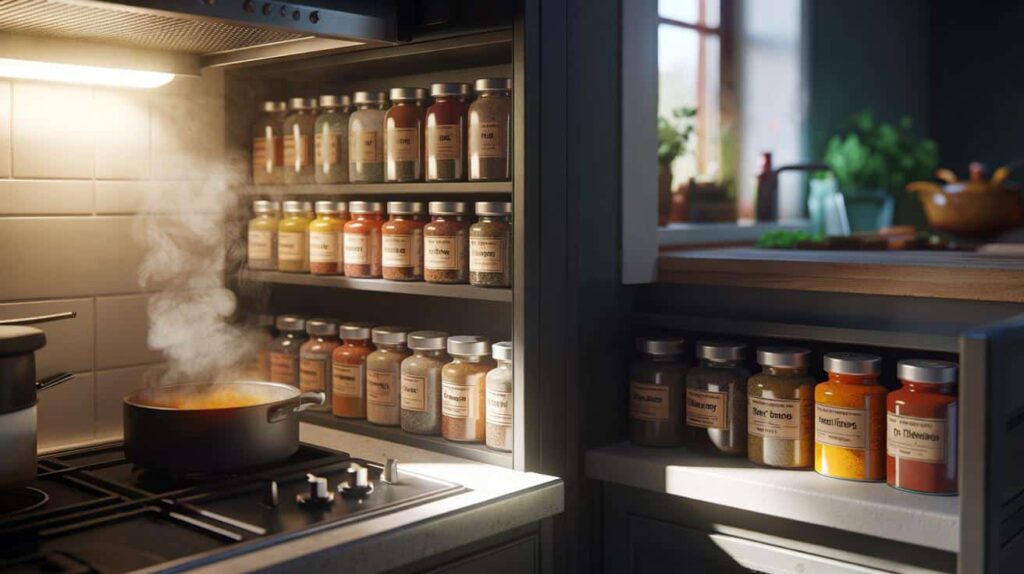
Somewhere between the canned tomatoes and the box of cereal, a quiet little crime scene is forming.

There’s one habit, so common we don’t even see it anymore, that quietly kills your spices long before the expiry date.

The pantry habit that quietly kills your spices
Most of us treat our spice jars like decorative wallpaper. We line them up in neat rows, labels facing out, right above the stovetop or on the first pantry shelf where the light hits. It looks organized, even a little proud, like a home cook’s trophy wall.

The problem is that this “easy reach” logic comes with a price. Heat, light and repeated exposure to warm, steamy air don’t just fade the labels. They strip the essential oils that give spices their smell, their bite, their magic. In real terms, that gorgeous spice rack next to the oven is quietly cutting the life of your paprika and oregano in half.
Think about the choreography of a normal weeknight dinner. You boil water, steam rises. You open the oven, a wave of hot air hits your face. You flip a lid, stir, salt, taste. Every time, the cupboard above the stove opens like a little sauna door. Spices sit there, lids unscrewed for long seconds, basking in that warm humidity.
One reader I spoke to had a pristine row of artisan glass jars perched on a windowsill “because the colors looked pretty in the light.” She replaced her turmeric every two months, convinced she just “used a lot.” When we moved the jars to a dark drawer and stopped storing them over the radiator, the same batch of turmeric stayed punchy for almost eight months. Same brand, same cooking habits, completely different outcome.
Spice flavor lives in volatile compounds, those tiny aromatic molecules that evaporate and oxidize under stress. Heat speeds that process up. Light breaks molecular bonds. Humidity clumps powders together and invites quiet mold growth you don’t always see.
Stored in a cool, dark, dry place, most whole spices can hold up for 2–3 years and ground spices for around a year. Put the same jars in a warm, bright cupboard above the stove, exposed to kitchen steam several times a week, and that lifespan drops dramatically. Many food scientists estimate loss of potency can double under those “convenient” conditions. Your nose already knows: if you have to stick your face in the jar and shake it like a maraca to get any scent, the damage is done.

How to store spices so they actually taste like something
The cure is not aesthetic, it’s boring: **move your spices away from heat and light**. Think about the coolest, least dramatic corner of your kitchen. A drawer away from the oven. A closed cabinet far from the dishwasher vent. A simple box or bin on a lower shelf. That’s where they belong.
Keep them in tightly closed containers, ideally glass or metal, and open the jars for the shortest time you reasonably can. If you cook a lot, decant a small “working” amount into a tiny jar and leave the main supply sealed. *This small habit alone can keep those delicate oils from escaping every time you make pasta sauce.*
Most people feel slightly guilty when they hear they’re “storing spices wrong.” Don’t. Nobody wakes up thinking about cumin shelf life. You cook where your hands naturally reach, and the stovetop zone is prime real estate.
A simple shift helps: imagine your spices as sleeping animals that hate sudden temperature changes. They like shadow, steady cool air, and quiet. What they don’t like is the hot breath of the oven door opening twenty times a week. And let’s be honest: nobody really does this every single day with military discipline. The goal is not perfection, just fewer heat waves in their tiny faces.
“Once I moved my spices out of the cabinet above the stove, everything tasted stronger. I didn’t change my recipes at all, I just stopped slow-cooking my paprika on a shelf,” says Clara, a home cook who finally ditched the Instagram shelf in favor of a dull-looking drawer.
- Keep spices away from heat sources
Not just the stove, but also the oven sides, microwave top, and dishwasher vents. - Choose dark, closed spaces
A drawer, opaque box, or closed cabinet slows down light damage and oxidation. - Close the lid quickly
Open, scoop, close. Lingering with the jar over steaming pots sends flavor into the air, not the dish. - Buy smaller quantities
Less waste, fresher flavor. Large tubs look economical, but they die on the shelf. - Trust your nose, not the printed date
If the aroma is faint, you’re cooking with ghost seasonings, whatever the label claims.
Living with spices that actually earn their shelf space
There’s a quiet satisfaction in pulling out a jar of cinnamon you bought last winter and having it hit your nose like warm toast and forests. You start using less per recipe because it finally tastes like something. Dishes you thought were “fine” suddenly have edges again, shadows, brightness.
This small, almost invisible pantry decision shapes the daily rhythm of your cooking more than any new gadget. Once you’ve tasted a chili made with properly stored cumin and smoked paprika, the flat version becomes hard to un-remember. You start eyeing the jars that have followed you through three apartments and a breakup, and realize some flavors aren’t gone, they were just prematurely aged by your layout. That’s often all it takes to rethink where the “heart” of your kitchen really is.
| Key point | Detail | Value for the reader |
|---|---|---|
| Move spices away from heat and light | Avoid cabinets above the stove, sunny windowsills, and spots near ovens or dishwashers | Spices keep their aroma up to twice as long, saving money and improving flavor |
| Use airtight, modest-sized containers | Glass or metal with tight lids; buy in smaller amounts and refill more often | Less staleness, fewer clumps, more intense seasoning in every dish |
| Adopt quick, low-exposure habits | Open jars briefly, keep them away from steam, store in dark drawers or boxes | Daily cooking becomes easier, with more reliable, consistent taste |
FAQ:
- Question 1Are spices unsafe once they “lose flavor,” or just weaker?
- Answer 1Most dried spices don’t suddenly become dangerous; they just lose potency and complexity. As long as they’ve been kept dry, free of visible mold, and don’t smell rancid or “off,” they’re usually safe, just disappointingly flat on the palate.
- Question 2How far from the stove should I keep my spice rack?
- Answer 2As a rule of thumb, avoid the immediate heat radius: not above the burners, not on the side panel of the oven, and not on a shelf that gets hot to the touch when you cook. A nearby drawer or a cabinet a step away from the main heat source works much better.
- Question 3Do metal spice tins preserve flavor better than glass jars?
- Answer 3Both can work well if the lids seal tightly. Metal has an edge because it blocks light completely, while clear glass needs the protection of a dark space. The real enemy is not the material but heat, light, humidity, and poorly sealed lids.
- Question 4Is freezing spices a good way to keep them fresh longer?
- Answer 4Freezing whole spices can extend life for some people, but condensation when you open the container can introduce moisture. For most home kitchens, a cool, dark cabinet is simpler and safer than juggling frozen jars near thawing foods.
- Question 5How often should I realistically refresh my spice collection?
- Answer 5As a loose guide, ground spices are happiest within 6–12 months, whole spices around 2–3 years. If you’ve been storing them in a hot, bright spot, cutting those times in half is more honest. Let your nose decide: if the aroma doesn’t jump out, it’s time to replace.
