
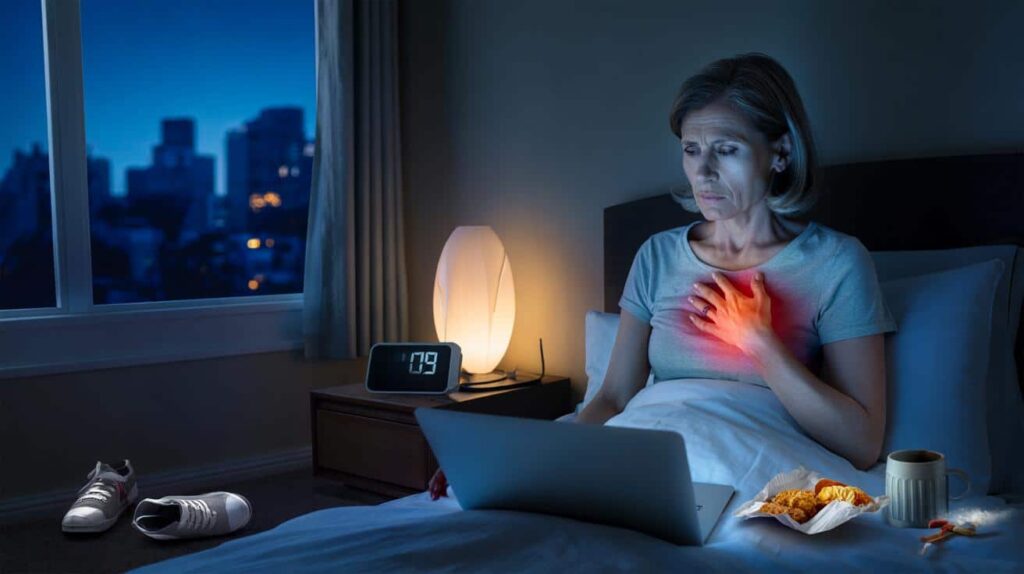
New research suggests that going to sleep in the early hours is linked with a higher chance of heart attacks and strokes, especially when late nights come with smoking, poor diet and little exercise.
What a major British study just revealed
A large team from the University of Birmingham analysed health data from more than 300,000 adults in the UK, with an average age of 57. The work was published in the Journal of the American Heart Association at the end of January.

Participants were asked about their “chronotype” – their natural tendency to be more active and alert in the morning or in the evening. Based on their answers and sleep habits, they were grouped into morning types, evening types, or somewhere in between.

Roughly 8% described themselves clearly as “evening types”, typically going to bed around 2am. This is the group often labelled as night owls.

Across about 14 years of follow-up, night owls showed a 16% higher risk of heart attack or stroke than people with intermediate sleep patterns.
Researchers did not just look at events such as heart attacks. They also used a global cardiovascular health score that combined several factors: smoking, sleep, physical activity, diet, body weight, blood sugar, cholesterol and blood pressure.
On that score, late sleepers stood out in a worrying way. People in the evening group were 79% more likely to have overall poor cardiovascular health compared with other profiles.
Why going to bed late is linked with heart risk
At first glance, it is tempting to blame the clock alone: sleep late, damage your heart. The data tell a more nuanced story.
About three-quarters of the extra cardiovascular risk among night owls appears to come from lifestyle patterns that cluster around a late schedule. In short, people who go to sleep very late are also more likely to:
- Smoke or vape
- Move less during the day
- Eat a lower-quality diet, often later at night
- Sleep fewer hours or at irregular times
- Carry excess weight
Those behaviours push blood pressure up, disrupt metabolism, raise cholesterol and affect blood sugar. Over years, that combination stiffens arteries and increases the likelihood of clots, which can trigger heart attacks or strokes.
The bedtime itself is a marker of risk, but the real damage seems to come from the lifestyle that often surrounds a night-owl routine.
Early birds and a small edge for the heart
On the other side of the spectrum, people who tended to go to sleep around 9pm showed a slightly lower risk of cardiovascular disease. That protective effect was more pronounced in women than in men in this study.
The reasons remain under investigation. One theory is that early sleepers align more closely with daylight, which may support healthier hormone patterns, better appetite regulation and more consistent exercise habits.
Chronotype: your internal clock, explained
Chronotype is the term scientists use to describe your natural timing: whether you feel best waking up at dawn or switching on at sunset.
It is influenced by genetics, age and light exposure. Teenagers and young adults tend to be later chronotypes, while many people shift earlier with age. Working night shifts, using screens at night, or not seeing much daylight can all push the internal clock later.
Being a night owl is not a flaw in character; it is largely a biological trait, but one that has to live in a society built for early birds.
The clash between a late chronotype and early work or school hours often leads to chronic sleep debt. Night owls may fall asleep at 1 or 2am but still wake at 6 or 7am for work, leaving them short on sleep most days of the week.
That shortage is not just about feeling tired. Repeated over years, chronic sleep restriction increases blood pressure, alters the way the body handles sugar and raises inflammation – all bad news for blood vessels.

How night owls can lower their heart risk
The researchers stress that evening types are not doomed to heart problems. Many of the risk factors are modifiable. Even if you naturally feel more awake late at night, you can still protect your cardiovascular system.
| Risk factor | Common pattern in night owls | Healthier shift |
|---|---|---|
| Smoking | Higher rates of smoking or vaping | Seek support to quit; avoid “late-night cigarettes” routine |
| Sleep length | Short, irregular nights | Aim for 7–9 hours with consistent bed and wake times |
| Physical activity | More sitting, especially evenings | Schedule walks or workouts at times you feel most alert |
| Diet | Heavy late-night snacks, fast food | Plan balanced meals earlier; keep late snacks light |
| Weight | Higher likelihood of excess weight | Combine better sleep and diet with regular movement |
Even small changes can help. Going to bed 30–45 minutes earlier, turning off bright screens at least an hour before sleep, or setting a regular wake-up time all support a more stable rhythm.
For people who cannot change their schedule easily – shift workers, for example – consistency matters. Keeping similar sleep and wake times across workdays and days off may reduce some of the strain on the heart.
Why women may be especially affected
The study reported that the difference in cardiovascular risk between early and late sleepers was particularly striking among women. That pattern raises questions about how hormones, sleep and heart health interact.
Women often experience changes in sleep around pregnancy, perimenopause and menopause. Those phases already bring shifts in blood pressure, cholesterol and body fat distribution. Adding irregular, truncated sleep on top of that may amplify risk.
For women who are natural night owls, midlife could be a key window to reassess sleep habits and heart checks with a GP.
Screening for blood pressure, cholesterol and blood sugar, alongside sleep discussions, can help catch problems earlier. Lifestyle support tailored to work hours, childcare and caring responsibilities makes realistic change more likely.
Understanding the numbers: what “16% higher risk” means
A 16% increase in risk can sound either huge or tiny, depending on how it is framed. It does not mean that 16 out of 100 night owls will definitely have a heart attack or stroke.
Instead, it describes a relative rise compared with people who are neither strongly morning nor strongly evening types. If, for instance, 10 out of 1,000 intermediate chronotypes had a cardiovascular event over a certain period, roughly 11.6 out of 1,000 night owls would be expected to have one.
The gap might appear modest at an individual level, yet across millions of people it translates into many extra heart attacks and strokes that could potentially be delayed or prevented.
Practical scenarios for late sleepers
Consider a typical office worker who naturally feels most focused from 9pm to midnight. They scroll social media until 1am, then wake at 6:30am for work. Coffee and a pastry replace breakfast, exercise rarely fits in, and dinner often arrives at 9:30pm. Over years, blood pressure creeps up and waist size expands.
Now imagine the same chronotype with a few strategic tweaks. Bedtime is pulled back to 12:15am, wake-up set at 7:15am. A short lunchtime walk adds 20 minutes of movement. The last meal is brought forward to 7:30pm, with only a small snack later if needed. There is no late-night cigarette. These shifts do not change who they are, but they ease the burden on their heart.
People with strong evening preferences who work flexible or remote jobs may also benefit from matching tasks to their natural peaks. Doing deep-focus work later in the day while keeping a solid, regular sleep window can help preserve both performance and health.
Key terms worth knowing
Several medical concepts sit behind this research. A few are useful to keep in mind when looking at your own habits:
- Chronotype: your natural tendency to feel sleepy and alert at particular times of day.
- Cardiovascular event: a serious problem affecting the heart or blood vessels, such as a heart attack (myocardial infarction) or stroke.
- Blood pressure: the force of blood pushing against artery walls; when consistently high, it damages vessels and the heart.
- Cholesterol: fatty substances in the blood; certain types, especially LDL cholesterol, raise the risk of blocked arteries.
Understanding these terms helps you make sense of check-up results and talk more easily with your doctor about sleep, lifestyle and long-term heart protection.
