
I grew up watching my parents do the exact same thing every evening: sit down, switch on the TV and stay there till bed. For 40 years, that routine barely changed. Now that I’m retired and facing my own long evenings, that memory has become a warning — and a challenge to do things differently.
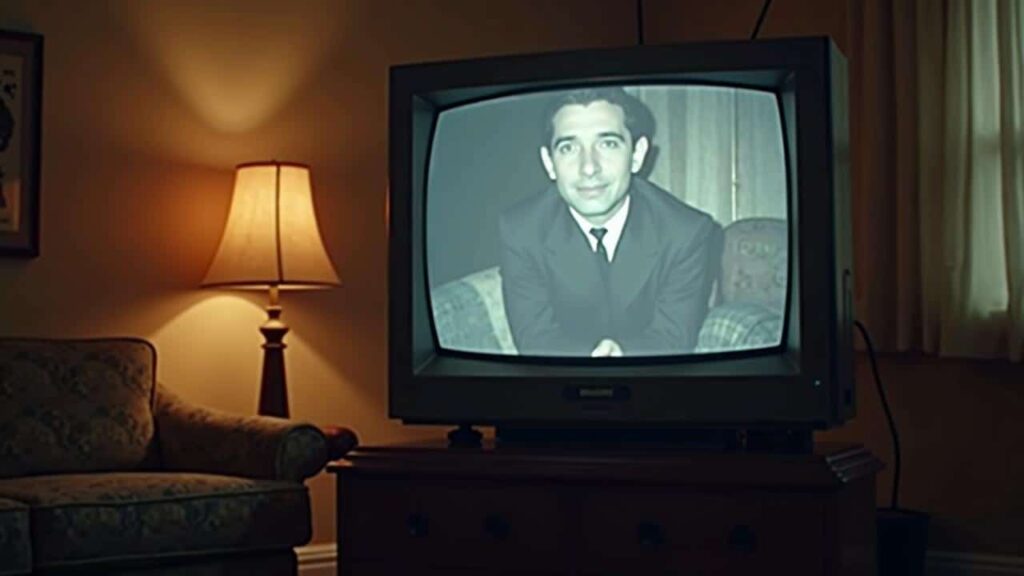
How a blue glow shaped a childhood
The clock would hit 7:30 and the ritual began. Plates scraped clean. Recliners pulled back. Remote in hand. The television did the rest.

The shows changed with the decades — from family sitcoms to glossy dramas and rolling news — yet the pose stayed the same. Same seats. Same angle of heads. Same silence, broken only by canned laughter and ad breaks.
For a child, the TV was like a third parent: always present, rarely questioned, quietly setting the rhythm of the home.

There was no grand crisis, no shouting, no dramatic intervention. Just a long, slow trade: countless evenings exchanged for the soothing certainty of scheduled programming. Birthdays, school plays, late football matches and community events had to compete with “regular shows”. Often, they lost.
When the sofa starts calling your name
Fast forward four decades. I’m retired. My knees ache more often, my energy dips earlier, and the sofa feels suspiciously comfortable by 6pm.
That’s when the past comes knocking. I remember the years my parents intended to “do more” but never quite left the living room. Their dreams shrank to fit the TV guide.
Faced with my own evenings, I saw two options:
- Follow their path: safe, familiar, predictable — and quietly numbing.
- Treat those hours as a second life: messy, imperfect, sometimes tiring — but alive.
I chose the second, and built a deliberate anti-recliner strategy.
Scheduling life so it can’t be cancelled
The power of awkward commitment
The easiest thing to abandon at 6pm is a vague good intention: “I should exercise” or “I might go out”. So I replaced intentions with obligations.
I joined a weekly activity with fixed times, other humans and money already paid. For me, that was a ballroom dance class every Tuesday night. I felt stiff, off-beat and slightly foolish. Yet the fact that an instructor and a partner were waiting meant I showed up.
Accountability, not willpower, is what gets you off the sofa. When others expect you, you often find energy you thought you’d lost.
Whether it’s a choir, a five-a-side football team, a ceramics course or community theatre, the principle is the same: put something in your calendar that requires your presence, not just your permission.
Two hours without screens — and what appears instead
Television is only part of the modern glow. Phones, tablets and laptops stretch screen time far beyond the living room. So I carved out a no-screen window between 6pm and 8pm.
No TV. No phone scrolling. No “just checking email”. The first week felt strange, almost anxious. Then something shifted.
- I noticed the light changing on the walls.
- Conversations lasted longer than three sentences.
- Dinner tasted different when I wasn’t half-watching the news.
Those two hours slowly filled themselves. I tried recipes that took more than 15 minutes. I started a 1,000-piece puzzle that lived on the table. On mild evenings, I sat on the porch with a mug of coffee and, occasionally, a neighbour.
Becoming a beginner again at 60
Why being bad at something feels oddly good
For decades at work, I was the person people came to for answers. Then retirement arrived and that identity dissolved overnight. Learning something completely new became a way to rebuild myself from scratch.
I chose two things that scared me a little: the guitar and Spanish. The first month was dreadful. My fingers refused to cooperate on the fretboard. Verbs twisted out of shape on my tongue. More than once I thought, “I’m too old for this.”
The shock of being terrible at something reminds you that growth doesn’t belong only to the young.
Then small breakthroughs arrived. A recognisable tune. A halting, real conversation in Spanish with a relative by marriage. Each tiny win made those evenings feel earned, not spent.
Helping someone else instead of numbing yourself
Television is an easy anaesthetic after a long day. Volunteering is the opposite: it wakes you up, sometimes uncomfortably.
 The Southern Ocean current reverses for the first time, signaling a risk of climate system collapse
Once a week, I signed up to teach adults to read at a local literacy centre. Walking in, I expected to feel noble. Instead, I felt humbled. People who had juggled two jobs and family life for years sat there wrestling with basic sentences, refusing to give up.
That changes how you see your own fatigue. A “tough day” at the office feels smaller when you’re watching someone sound out their first book at 45.
Turning weeknights into mini weekends
A strange cultural rule runs through many households: fun is mostly for Friday night and Saturday. Weeknights are for recovery and routine. I started breaking that rule.
One Tuesday, I booked late entry to a museum. Another week, I tried a new restaurant on a Wednesday. Some nights I took a slow photography walk through town, capturing shop signs, reflections in puddles, the last bus home.
When you sprinkle “special” plans across the week, life stops feeling like five days of waiting for two days of living.
The key was planning during the day, when I felt optimistic. By 5pm, the sofa always sounded tempting. By then it was too late; the ticket was bought, the reservation made. Future-me had to keep the promise past-me had paid for.
A quiet, sacred half hour
Not every change has to be social or ambitious. I built one small private ritual: at 9pm, every night, I make tea and play guitar for 30 minutes. No phone nearby, no multitasking, no goal beyond showing up.
That half hour acts like a bookmark between day and night. On bad days, it’s a reset button. On good days, it’s a quiet celebration. Crucially, it’s mine: not for work, not for family, not for self-improvement metrics.
Learning to say yes after 5pm
I used to decline almost any invitation that involved leaving the house in the evening. “I’m too tired” became a reflex. I started running a small experiment: say yes first, then see what happens.
Dinner with friends on a Monday. A free lecture at the library. A book club that meets at 7pm. The surprise was how often my energy rose to match the event once I got there. The anticipation was worse than the reality.
Television with intention, not by default
None of this means banning TV. Screens are not the enemy; autopilot is. I still watch shows, but I treat them like a chosen meal instead of endless snacking.
| Autopilot TV | Intentional TV |
|---|---|
| Turn it on “for background” and never quite turn it off | Pick one programme or film and stop when it ends |
| Channel-hop until something mildly interesting appears | Decide in advance what you actually want to see |
| Watch alone, while scrolling on a phone | Watch with someone, talk about it, then switch off |
This small mental shift changes how an evening feels. You didn’t “lose” three hours to random content; you chose 45 minutes you genuinely enjoyed, then moved on.
What’s really at stake in those quiet evenings
Psychologists sometimes talk about “time confetti”: tiny scraps of leisure that get scattered and wasted through distraction. Long evenings can suffer the same fate. A few minutes of social media here, another aimless show there, and the night dissolves without leaving a trace.
There’s also the “active vs passive rest” difference. Passive rest — like scrolling or background TV — can relax you briefly, but often leaves you oddly flat. Active rest demands a little effort at the start (getting to a class, picking up an instrument) yet tends to refresh you more deeply.
Think of your energy like a muscle: it doesn’t simply refill by doing nothing; it strengthens through varied, meaningful use.
If you want to change your own evenings
For anyone looking at their own nightly routine with a knot of unease, the shift doesn’t need to be dramatic. One small change can tip the balance.
- Choose one fixed weekly activity that involves other people.
- Block a modest no-screen window, even 30 minutes to start.
- Pick a hobby where you are allowed to be bad for at least a year.
- Add a short volunteering slot once or twice a month.
- Protect one simple nightly ritual: reading, stretching, music, journalling.
Picture your future self, decades from now, looking back. Do they mainly remember plotlines from long-forgotten series, or specific evenings — the awkward dance steps, the late-night museum, the first full sentence a stranger managed to read out loud?
Those memories are being negotiated tonight, between the pull of the recliner and the small, inconvenient decision to stand up and step outside the blue glow.
