
The first alert buzzed on phones just after 5 p.m., right in the middle of dinner prep. A sharp tone, then that familiar gray box: “Heavy snow expected before dawn. Dangerous travel. Multi-hour delays likely.” Outside, the sky over the neighborhood was still a quiet, dull blue, the kind that tricks you into thinking the forecast is exaggerating. Kids were kicking a half-flat soccer ball in the street, delivery drivers rolled by, and someone was walking a dog in a hoodie, no hat, no gloves.
In living rooms across town, the same small ritual played out. People glanced at the alert, frowned for a second, and then went right back to what they were doing.

Because the snow is coming.

And almost nobody is planning to stay home.

“I can’t just not go”: The snowstorm nobody wants to respect
By early evening, grocery store parking lots were jammed, but not with people panic-buying bread and milk. Instead, there were workers grabbing quick snacks for the overnight shift, parents picking up poster boards for school projects that *still* need to be handed in tomorrow, and ride-share drivers hustling for one last run before the roads turn slick. The storm warnings kept stacking up in the background like unread emails.
On local radio, the meteorologist’s voice grew more insistent. Eight to twelve inches before lunchtime. Wind gusts knocking visibility down to a few meters. “If you can stay home, do it.” The phrase repeated like a broken record. But for a lot of listeners, that sentence felt like it belonged to someone else’s life.
Take Madison, a 29-year-old nurse who just finished a stretch of three night shifts. Her phone lit up twice: one alert from the weather service, one from her hospital reminding staff that “all scheduled shifts remain in effect.” She stared at the messages while reheating leftover pasta. She doesn’t have four-wheel drive. She does have patients waiting.
Down the street, a mechanic named Luis checked the tires on his decade-old sedan under a flickering garage light. He has a 5 a.m. clock-in time at the factory and a supervisor who once said, “Snow is not an excuse unless the road is closed.” Those words stick longer than any weather bulletin. By 9 p.m., social media was full of screenshots of the alert, but also full of comments like, “Cool, see you all at 7 a.m. on the highway.”
The gap between official warnings and daily reality has rarely felt wider. Forecast models use neat colors and clean lines: red for risk, blue for snow, yellow for ice. Real life runs on rent, shifts, kids, and contracts written long before this storm was ever named. There is a quiet, unspoken calculation happening in thousands of homes: risk of sliding into a ditch versus risk of losing a day’s pay.
That’s why the alerts, as precise as they are, land on a messy human world. People have seen snowy headlines before that fizzled into slush. They’ve also seen bosses who remember every absence. Let’s be honest: nobody really reads a push alert and instantly rearranges their entire life.
How people are preparing to go out… while saying they “won’t take risks”
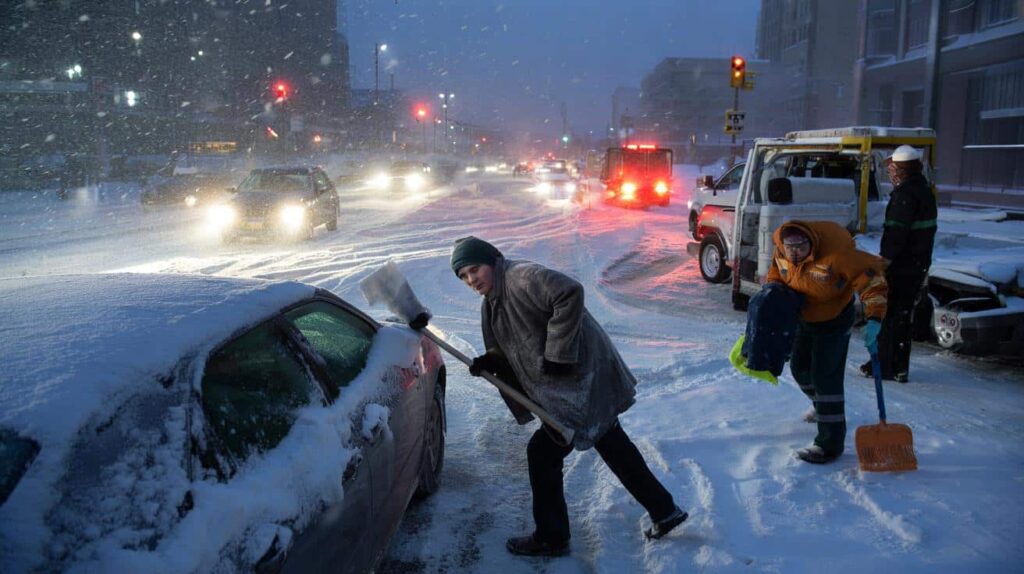
What’s striking tonight isn’t the number of people planning to stay in. It’s the quiet, almost stubborn ritual of those getting ready to go out anyway. Some lay out their clothes in layers on the couch: thermal shirt, sweater, heavy coat. Others place boots by the door and tuck extra socks into their bags, like a small rebellion against the cold.
A few are thinking tactically. Setting alarms 45 minutes earlier to “drive slow.” Throwing a snow brush, a small shovel, and a blanket into the trunk, just in case. One father on a late-night coffee run mentions keeping a thermos of hot tea in the car and programming the local traffic station into his presets. He shrugs, blows into his hands, and says, “I’ll be careful. But I still have to go.”

There’s a strange comfort in these small preparations. They give a sense of control in a night that is, by design, unpredictable. People talk about checking their wipers, updating their navigation app, topping up the gas tank, bringing a charger. They don’t talk as much about the tense grip on the steering wheel or the moment you realize the car isn’t stopping as fast as you thought it would.
We’ve all been there, that moment when the car in front hits the brakes and you feel your own tires skate, just a little. Most residents know the basics—go slow, brake gently, keep distance—yet the pull of “I’ll be fine, I’ve done this before” is strong. That’s how you get highways full of cautious drivers and a few overconfident ones turning the whole road into a chain reaction.
For city officials and first responders, this familiar pattern is both frustrating and entirely predictable. One local firefighter put it bluntly hours before the flakes:
“Every time we send out these alerts, we hope this will be the storm where people just stay home,” he said, rubbing his eyes after a long shift. “And every time, they don’t. So we plan for the reality, not the ideal.”
Behind the polished forecasts and press conferences, their planning list is brutally simple:
- Extra staff on ambulance and tow-truck rotation from 3 a.m. onward
- Plows ready at highway on-ramps, not just main arteries
- Emergency shelters prepped for stranded commuters
- School bus inspections moved up by several hours
- Dispatchers briefed to expect a spike in minor crashes and spinouts
That backstage work won’t appear in your push alerts. But it sits there like an invisible net under all those individual choices to “just get to work, like always.”
The stubborn rhythm of a city that refuses to stop for snow
By the time the first heavy bands of snow roll in, most people will be asleep, alarms set, clothes ready, routes mentally mapped. Streets will slowly disappear under a clean, white sheet that looks peaceful from the warmth of a bedroom window. Somewhere, a plow will clatter past and throw up a wave of ice against the curb.
What happens between 3 a.m. and 7 a.m. is a kind of test. Not just of road salt and snow tires, but of a community’s unspoken priorities. Schools will debate late starts, offices will send half-hearted “use your judgment” emails, and a thousand private conversations will play out in kitchens and text threads: “Are you going in?” “Do you think it’s that bad?” “My boss expects me.”
There’s no simple villain here. Not the weather, not the workplaces, not the residents who shrug and say, “I can’t afford to call out.” A storm like this just shines a harsher light on habits that already exist. Some people will share photos of the snowfall with a mug of hot chocolate, safe at home. Others will share the same snowy scene from a bus stop bench or a parked car on the shoulder, waiting for a tow.
Everyone is living the same forecast. Not everyone gets the same choices. And that’s where the conversation really starts. When the flakes settle and the headlines shift on your phone screen, the questions will hang in the air: How much risk feels normal? How much risk is too much? And who actually gets to decide whether a “dangerous travel” alert means a slower morning… or a day that changes everything?
| Key point | Detail | Value for the reader |
|---|---|---|
| Official alerts vs. real life | Warnings urge people to stay home, while many residents still plan to commute | Helps readers recognize their own choices in the larger picture |
| Quiet preparation rituals | Layers of clothing, earlier alarms, car kits, backup plans with neighbors | Offers realistic ideas to stay safer without pretending people won’t go out |
| Hidden emergency work | Extra crews, tow trucks, shelters and dispatchers on standby overnight | Gives context on what’s happening behind the scenes as the storm hits |
FAQ:
- Question 1Is it really that risky to drive before dawn during a heavy snowstorm?Yes. Visibility is lower, roads are less treated, and black ice is more common before plows and salt trucks have had time to work, so even experienced drivers can get caught off guard.
- Question 2What’s one thing I can do tonight if I still have to go out tomorrow?Lay out your gear and prep your car: clear the windshield fully, pack a small kit (blanket, scraper, flashlight, phone charger), and plan to leave earlier so you’re not tempted to rush.
- Question 3Should I pressure my boss to let me work from home during the storm?You can at least ask. Frame it as a way to stay productive while reducing risk, and suggest specific tasks you can handle remotely so it sounds concrete, not like an excuse.
- Question 4Are public transit options safer during heavy snow?They can be, because trained drivers and larger vehicles tend to handle slippery conditions better, though delays and cancellations are common and you may still need to walk in difficult conditions.
- Question 5What if I simply can’t afford to miss work even with the alerts?Then your focus shifts to reducing risk: drive slower than feels “normal”, increase following distance, avoid sudden braking, and consider carpooling with someone who has winter-ready tires or a safer route.
