
At 7:14 a.m., the street is still half asleep, but the maple in the front yard is already buzzing. A pair of cardinals flicker red against the gray February sky, jostling for space with pushy house finches. The air is cold enough to sting your nose, your coffee’s going lukewarm on the porch rail, and yet the feeder is a miniature rush hour.
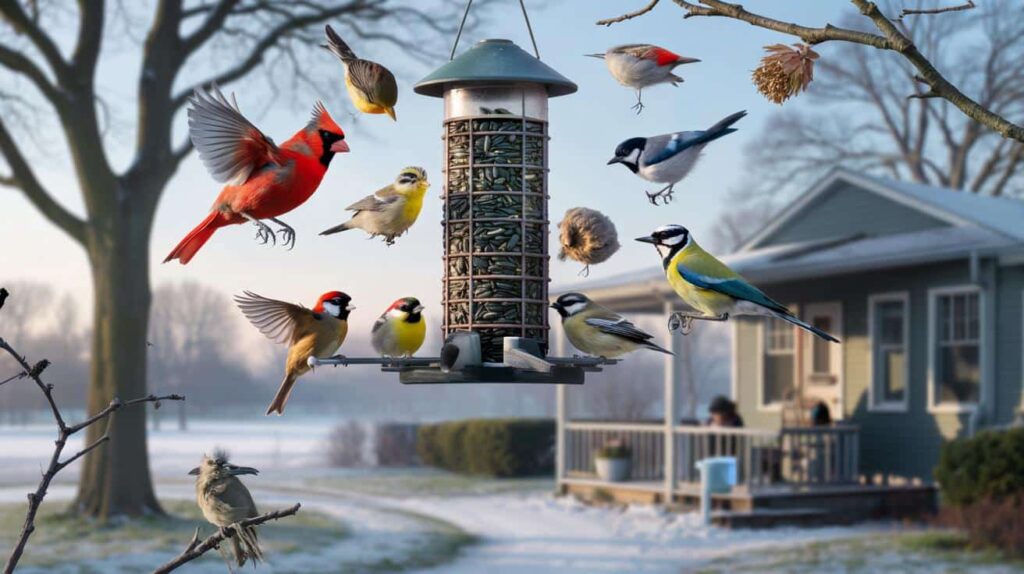
Your neighbor steps out, bathrobe flapping, and quietly laughs. “It’s that cheap stuff I put out,” she says, nodding toward the feeder swinging from a crooked hook. The “cheap stuff” looks like nothing special.

But every morning, the show starts right on time.
There’s a reason they keep coming back.

The cheap February treat birds can’t resist
Ask winter bird people their secret and they rarely mention fancy blends or gourmet suet from boutique shops. Again and again, they talk about the same simple thing: plain, old-fashioned black oil sunflower seeds.
Not the striped, hard-to-crack kind. The thin-shelled, oily ones that look a little dusty, usually sold in big, no-frills bags. The kind you can find at farm stores, hardware chains, even the corner supermarket if you look low on the shelf.
That’s the quiet February hack many backyard bird lovers use to keep their feeders constantly busy when everything else feels frozen and empty.
Spend a February morning near a feeder filled with black oil sunflower seeds and you start recognizing regulars. Chickadees zip in, grab a seed, and vanish to a nearby branch. Blue jays land with a thump, glaring around like they own the joint. A downy woodpecker clings sideways, hammering at a seed in its beak.
One Wisconsin homeowner told me she went from “the occasional sparrow” to “I can’t keep it full” just by switching from a bargain “wild bird mix” to a big, store-brand bag of black oil seeds. No extra bells or whistles. No red ribbon on the packaging.
Her phone is now full of slightly blurry bird photos taken through the kitchen window.
The magic is in the energy payoff. Black oil sunflower seeds are high in fat and calories, with thin shells that are much easier for small birds to open, especially when they’re burning precious energy just to stay warm.
In February, insects are scarce and frozen ground locks away natural food. Birds can’t afford to waste effort on tough, low-reward seeds. So they learn fast which yards have the good stuff.
*Feeders that offer simple, energy-dense food become reliable survival stations, not just casual snack spots.*
 Probably F?15s, F?16s, F?22s And F?35s : Dozens Of US Jets Now Converging On The Middle East
How to use this simple trick like a pro birder
The basic method: pick up a bag of black oil sunflower seeds, fill one main feeder with nothing else, and keep that feeder topped up through February. That’s it. No complicated recipes. No Pinterest-level crafting.
Tube feeders with perches, hopper feeders, and simple platform feeders all work well. Just avoid super tiny ports meant only for nyjer seed. If your budget is tight, start with a medium bag and a single feeder in the most visible spot from your main window.
You’re not just feeding birds. You’re creating a tiny, predictable morning ritual for them — and for you.
A lot of people try this once, then think, “Did I do something wrong?” when they don’t get a huge crowd on day one. Birds need a little time to discover a new food source and decide it’s worth coming back.
Give it a week or two. Keep the seeds fresh, brush snow off the feeder roof, and empty out any soggy clumps after storms. Let’s be honest: nobody really does this every single day. But even imperfect consistency matters.
One gentle warning: those colorful “mixes” full of red millet and cracked corn often end up scattered on the ground. Birds pick out the sunflower and toss the rest, leaving a messy ring that attracts mice more than cardinals.
“Once I switched to straight black oil sunflower, it felt like word got out in the neighborhood,” laughs Lisa, a backyard birder in Ohio. “I started recognizing individual birds. That feeder became my little morning news channel.”
- Best cheap seed to usePlain black oil sunflower seeds from bulk bags or store brands, not “gourmet” blends.
- Best way to offer itOne main feeder kept reasonably clean and consistently filled through late winter.
- Simple upgrades that helpA shallow water dish nearby and a second “backup” bag stored in a dry bin.
- Common mistake to skipBuying pretty mixed seed that looks great in the bag but ends up on the ground.
- Bonus valueDaily close-up views of local birds, plus a natural indicator of changing seasons as new species appear.
Why this tiny habit feels bigger than it looks
Something happens when you start noticing who shows up at your feeder each February morning. The rush of the school run or commute is still there, the inbox still waiting, but for a few minutes you fall into this quieter, non-human traffic.
You begin to learn which bird is bold enough to come while you’re still standing under the tree. Which one always waits on the same branch. Which way the flock scatters when a hawk passes over.
The cheap bag of black oil seeds becomes a small anchor in days that otherwise blur together.
| Key point | Detail | Value for the reader |
|---|---|---|
| Use black oil sunflower seeds | High-fat, thin-shelled seeds that are easy for many species to eat in cold weather | Draws more birds, more often, without paying for premium mixes |
| Stick to one “reliable” feeder | Keep a main feeder consistently filled during February, in a visible, safe spot | Turns your yard into a regular stop on local birds’ winter route |
| Skip low-value mixes | Cheap blends with lots of filler (millet, cracked corn) mostly end up wasted | Saves money, reduces mess, and keeps focus on what birds really want |
FAQ:
- What kind of sunflower seed works best in winter?Black oil sunflower seeds are the top choice. They have thin shells, high fat content, and are easy for small birds to open, which is critical in cold February weather.
- Will I only attract one or two species with black oil sunflower?No. This one seed pulls in a surprising mix: chickadees, titmice, cardinals, nuthatches, finches, woodpeckers, some sparrows, and often blue jays. It’s one of the broadest-appeal seeds you can offer.
- Is it okay to buy the cheapest bag I find?Yes, as long as it’s labeled black oil sunflower and looks clean and dry. You don’t need fancy “premium” blends. Just avoid bags with lots of stems, dust, or obvious mold.
- How often should I refill the feeder in February?As often as it empties, within reason. Once birds discover a steady source, they’ll check it daily. Aim for regular refills every few days and a quick clean if things get wet or icy.
- Won’t sunflower seeds attract squirrels?They might. Many people hang feeders away from jump points, use baffles on poles, or give squirrels their own ground feeding spot. Some accept the occasional squirrel visit as part of the backyard drama.
