The living room is quiet except for the soft hum of the boiler in the next room. Outside, the wind is whipping rain against the windows, the kind of cold that seems to slide under the door and sit on your ankles. You glance at the thermostat: 18°C. Too low. You jab the button up to 24°C, because you’re freezing and you want to feel warm now, not in an hour.
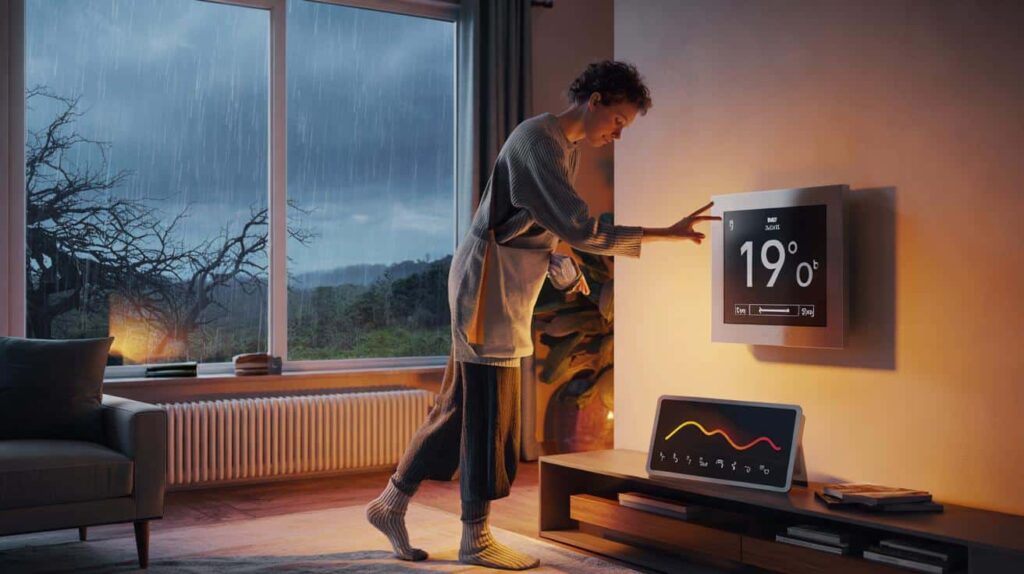
You walk away feeling oddly triumphant, as if you’ve just pressed “turbo heat”.
Ten minutes later, you’re still cold. And your heating engineer, if they could see you, would probably be shaking their head.
The big thermostat myth that quietly drains your wallet
Ask any heating engineer what drives them mad in winter and you’ll get the same answer: people treating their thermostat like an accelerator pedal. Cold snap hits, and suddenly every dial in the country is cranked from 19°C to 25°C in one impatient swipe. The idea is simple: turn it up higher and the house will warm up faster.
That tiny, familiar gesture is one of the most expensive winter habits we have.
In a small semi-detached outside Leeds, engineer Sam Collins watched this play out during a call-out last December. A young couple with a new baby swore their boiler “wasn’t powerful enough” because the rooms stayed cold for ages. Their thermostat was set at 27°C.
They’d been blasting it up whenever they felt a chill, then turning it almost off once they overheated. The boiler was cycling on and off like crazy, the radiators never quite catching up, and their usage report from the energy supplier showed a sharp spike every evening. The couple were shocked to hear nothing was broken. The “fault” was their fingers.
The logic error is simple, and it fools almost everyone. A standard thermostat doesn’t work like a tap where “more” means “faster”. It’s more like a light switch with a target: it tells the boiler, “Heat until the room hits 20°C,” not, “Heat harder because they’re fed up waiting.”
Cranking it to 25°C doesn’t speed up the warm-up. It just keeps the boiler running longer, overshooting the point where you’d actually feel comfortable and nudging your bill quietly higher.
What heating engineers wish you’d do instead
The professionals’ advice sounds boring next to the drama of big, satisfying thermostat jumps, but it works: pick a realistic comfort temperature and hold it steady. For most households, engineers suggest around 18–21°C in living spaces, a touch cooler in bedrooms.
Instead of yo-yoing between “off” and “tropical”, set that number and give the system time to reach it. A well-balanced setup will warm at the same speed whether you ask for 20°C or 28°C. The boiler fires at a fixed rate; you’re just choosing when it’s allowed to stop.
One London installer described visiting an older gentleman who swore the “only way” to stay warm was to “blast it”. Every morning, he’d slam the thermostat up to 26°C, then crack open a window when it got stuffy. His gas usage was nearly double that of his neighbour in an identical flat.
When they tried a small experiment for a week — thermostat at 20°C, left alone, with the heating starting a bit earlier — something surprising happened. The flat felt more consistently comfortable, the man stopped waking up at 4 a.m. sweating, and his smart meter graph smoothed into a gentle curve instead of wild mountains.
The deeper truth is that your heating system hates drama. Short bursts of intense heat followed by long off periods force your boiler to keep reheating cold water, push pipes and valves harder, and encourage condensation on cold walls. A steady, moderate target lets the boiler cruise instead of sprinting and collapsing.
Let’s be honest: nobody really does this every single day without slipping back into old habits at least once. Yet that small mindset shift — from “blast” to “balance” — is what turns the thermostat from a panic button into a quiet ally during cold spells.
The hidden signals your thermostat is sending
Here’s what engineers quietly recommend when they see a house where the thermostat is being “mistreated”: first, watch it for a full day. Not the number, but its behaviour. Notice how often the heating clicks on and off, how long it takes for rooms to feel comfortable, and what’s happening outside when you decide to tap it up.
Then, choose a single adjustment rule. For example: only change the setting by 1°C at a time, and then wait at least an hour before deciding if you need more.
Many of us fall into the trap of “emotional heating” — reacting to a sudden chill after opening a door, coming home damp, or sitting too long without moving. We smack the thermostat in frustration, as if it’s ignoring us. A lot of wasted energy starts with that tiny, impatient moment.
There’s a softer way to deal with it. Put on a jumper, close the draughts, give the system time to respond, and only then consider a small change. You’re not failing if you sometimes forget. You’re human, you’re cold, and your thermostat is right there on the wall begging to be pressed.
Heating specialist Laura Jiménez puts it bluntly: “Your thermostat isn’t a volume knob. Turning it higher won’t heat faster, it just means your boiler won’t stop when you’re already warm. The number you choose is about comfort, not speed.”
- Stop “maxing out” the dial when you feel a sudden chill
- Use 18–21°C as a realistic target range for most rooms
- Change the setting in 1°C steps and wait before judging
- Check if cold spots are from draughts or blocked radiators, not the thermostat
- *Treat the thermostat as a gentle guide, not a panic button*
What your next cold spell could look like instead
Picture the next icy week with a slightly different script. You come home, nose stinging, hands numb, and instead of lunging straight for 25°C, you glance at the display. It’s already sitting at 19°C because you left it ticking over. The air isn’t toasty yet, but it isn’t bone-deep cold either. You nudge it once, to 20°C. Then you walk to the kitchen, put the kettle on, pull on thicker socks.
By the time the tea is brewed, the house feels… fine. Not sauna-level, not Instagram-cosy with fake snow on the sill, but quietly liveable.
Over a month, that calm approach starts to show up in small ways. The gas bill lands and it’s not a horror story. The boiler sounds less like it’s going to take off. That creeping guilt every time you hit “up” on the thermostat eases.
Friends might still brag about “cranking it to 26” when the frost hits, like a badge of honour, a way of saying they won’t let the weather win. You’ll know something they don’t: the real power move was learning what that plastic box on the wall was trying to tell you all along.
| Key point | Detail | Value for the reader |
|---|---|---|
| Thermostats don’t speed up heating | Higher temperature settings extend running time, not warm-up speed | Helps avoid pointless “blasting” that inflates bills |
| Steady settings beat big swings | Moderate, stable targets keep boilers running efficiently and rooms comfortable | Reduces costs, stress on equipment, and temperature rollercoasters |
| Small habits change energy use | 1°C adjustments, observing usage, and tackling draughts first | Gives practical control over comfort without sacrificing warmth |
FAQ:
- Does turning my thermostat up heat the house faster?
No. Most domestic systems heat at a fixed rate. A higher setting just keeps the boiler running longer, overshooting your comfort point and using more energy.- What’s a good temperature to set during a cold spell?
For most people, 18–21°C in living areas works well, with bedrooms slightly cooler. If you’re older, unwell, or have a newborn, hovering towards the upper end of that range can feel safer and more comfortable.- Is it cheaper to leave the heating on low all day or switch it on and off?
Engineers generally favour timed, targeted heating: off when you’re out, on before you wake or get home. Leaving it on “low” constantly often means paying to heat an empty house and walls that don’t need it.- Why does my home still feel cold even at 21°C?
Cold spots usually come from draughts, poor insulation, or furniture blocking radiators, not the thermostat setting. Sorting those physical issues often makes 20–21°C feel much warmer.- Should I upgrade to a smart thermostat?
A smart thermostat won’t magically cut bills on its own, but it can help you see patterns, avoid over-heating, and schedule warmth around your life. The real savings come from how you use it, not just having it on the wall.