It doesn’t matter that you slept just a few hours, that your calendar is overflowing, or that you genuinely tried this morning. You lean closer to the mirror and squint, and then you see it. Your under-eye area looks dry and uneven, with a strange texture you weren’t expecting. The concealer you blended so carefully minutes ago has settled into thick creases, clinging to lines you barely noticed before. Your phone vibrates and you’re already late, yet you can’t look away, wondering how it turned so cakey and heavy. Tapping it makes it pill, swiping makes it streak. Every touch worsens it. What promised a second-skin finish now makes you look tired and overdone.
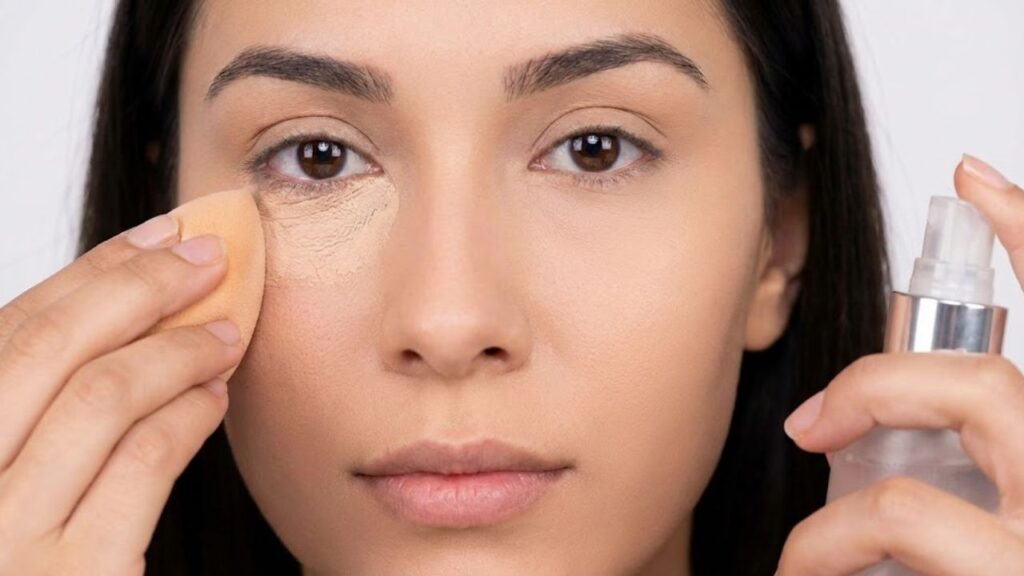
Why Concealer Becomes Cakey So Easily
Most people blame the product, but the real issue is usually the skin underneath. Concealer magnifies everything it sits on. Dry patches, fine lines, leftover eye cream, and even old mascara residue can combine to ruin the finish fast. The under-eye area has very few oil glands, making it delicate and constantly moving when you talk, laugh, or squint. A thick layer of pigment on that thirsty, shifting skin is bound to crease. Often, the concealer isn’t bad; it’s simply being asked to do too much without support.

On a crowded morning commute, you might notice this play out in real life. One woman checks her reflection on her phone, gently tapping under one eye. On one side, the concealer has cracked into tiny dry patches. The other side looks smoother and more skin-like. Later, she explains she rushed her skincare, skipped eye cream, and applied a heavy full-coverage concealer straight from the applicator. By mid-morning, it had already settled into lines. At lunch, she remembered a makeup artist’s tip about warming concealer with fingers and pressing instead of dragging. In seconds, one side improved. The other still looked like dried paint.

Beauty brands quietly acknowledge what mirrors already show. Many people use too much concealer, too quickly, on skin that isn’t ready. The clash between texture, quantity, and skin condition is where caking begins. When concealer is too dry, it grips rough skin. When it’s too creamy, it slides into lines. Use too much, and it sits on top instead of blending in. Body heat, facial movement, and even humidity all influence how it behaves. Concealer is like a soft wax that melts, moves, and sets in layers. If those layers are uneven or overloaded, cracking is almost guaranteed.

The 10-Second Trick That Smooths Cakey Concealer
The fastest fix is surprisingly simple: use clean, warm fingers and press. No extra product, no tools. Your fingertip is slightly warmer than your skin, and that warmth softens concealer trapped in fine lines. Look down into a mirror so the under-eye stretches slightly. Place your ring finger on the cakey area, count to three, then gently press and roll without swiping. You’re redistributing product, not scraping it away. In about ten seconds, the surface looks more like skin and less like makeup.
On a shoot with a beauty editor who’d been awake since early morning, her concealer started cracking midday. There was no time for a full redo. She dabbed under her eye with a tissue to remove excess oil, warmed her ring finger, and pressed gently. You could see the product soften and blur. The lines remained, but the heaviness disappeared. The same motion works at your desk, in a bathroom stall, or in the back of a cab. It looks like a casual touch, not a makeup fix.
 6 Eye Shadow Primers That Keep Makeup Smooth Vibrant and Crease-Free From Morning to Night
There are common mistakes to avoid. Adding more concealer on top of creases creates a double layer that collapses again. Panic-powdering only exaggerates texture. Powder works best after the concealer is already smooth. The priority is always to reset the product first, then lightly set if needed.
Letting Go of “Perfect” Concealer
Once you see how a small adjustment can fix cakey concealer, the idea of a flawless, unmoving base starts to change. Maybe the goal isn’t makeup that never shifts, but makeup that can be refreshed easily as the day goes on. This mindset removes pressure. Instead of chasing one perfect product, you choose formulas that respond well to warmth, touch, and quick mirror checks.
Skin has texture. Fine lines appear when you smile at a message or laugh unexpectedly. You don’t need to erase these to look good. Everyone has had that moment in the afternoon when they think they looked better earlier. That feeling is real. But it softens when you realize the fix takes seconds. Not a full reapplication. Just a quick press with a finger, a tissue, or a light touch of powder. The technique is also a way of thinking. It allows makeup to adapt with you instead of working against you. A crease stops being a problem and simply becomes a sign of expression—something that can be smoothed gently in under ten seconds.
Key Points to Remember
- Prep the skin first: Use a thin, well-absorbed layer of moisturizer before concealer to reduce dryness and patchiness.
- The 10-second press: Warm fingertips and gentle pressure help melt and redistribute product without removing everything.
- Correct, don’t layer: Remove excess, smooth the surface, then lightly set to avoid a heavy, mask-like finish.