
In a nutshell
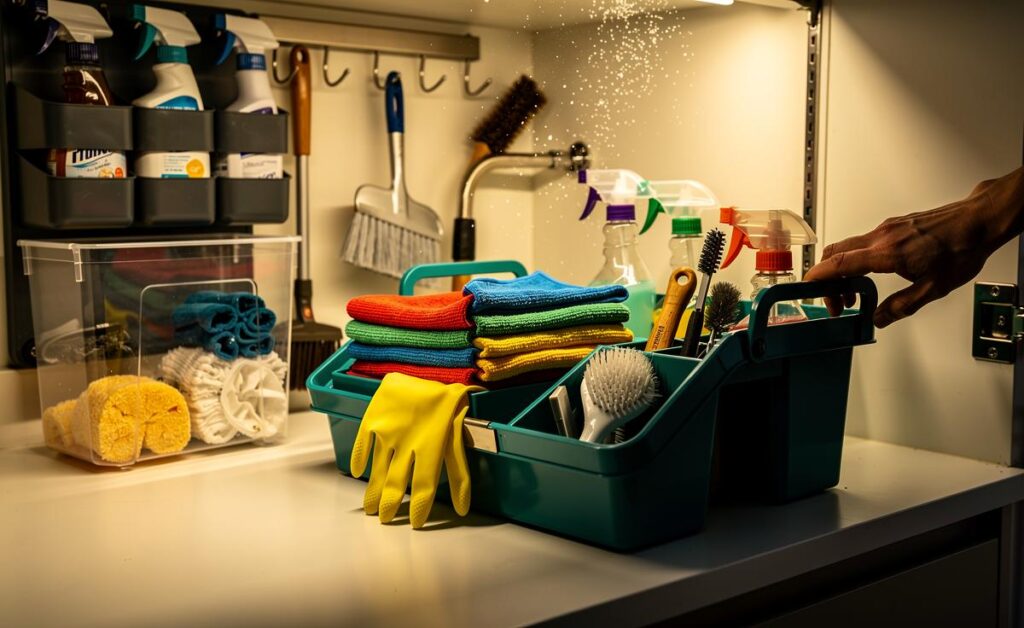
- 🧰 Organise by Task, Not Room: Group supplies into Dust & Polish, Wet Clean, Degrease, Sanitise, and Descale to cut decisions and footsteps.
- 🏃♂️ Grab-and-Go Zone Kits: Portable caddies for Kitchen, Bathroom, and General areas prevent mid-job trips and keep momentum high.
- 🏷️ Label, Refill, Rotate: Clear dilution labels, a weekly refill rhythm, and FIFO cloth rotation maintain safety and eliminate shortages.
- 🗂️ Speed-First Storage: Use open caddies, rails, and over-door organisers; avoid deep baskets and unlabelled bottles that slow recognition.
- ⚡ Smart Placements & Micro-Habits: Keep tools where mess happens and stack “while I’m here” tasks to stop buildup and halve cleaning time.
A tidy house starts with a tidy toolkit. If your sprays, cloths, and gloves live in a jumble under the sink, every chore begins with a scavenger hunt. That’s why the smartest way to speed up housework is to reorganise what you own, where you keep it, and how quickly you can grab it. In reader homes I’ve visited across the UK, simple rearrangements have shaved minutes off every task, compounding into hours by week’s end. The principle is simple: reduce decision-making and footsteps, and cleaning time falls by half. Here’s how to overhaul your supplies so every wipe, sweep, and scrub flows without friction.

Organise by Task, Not by Room
Most people store their cleaning supplies by location with one set in the bathroom & another in the kitchen. This approach misses the point because dirt and grime are not tied to specific rooms but to specific jobs like removing grease or tackling limescale. When you organize your supplies by the type of cleaning task instead you will always have what you need regardless of where the problem shows up. Set up five main groups for your supplies. The first group handles dust and polish and should include microfibre cloths along with a duster and furniture polish. The second group covers wet cleaning with all-purpose spray and a squeegee plus mop solution. Your third group focuses on degreasing and needs degreaser with a scraper and a sponge for your stovetop. The fourth group is for sanitizing and requires disinfectant with gloves and color-coded cloths. The fifth group tackles descaling with acidic bathroom cleaner and a grout brush. Keep your main supply of each task kit in one central location to avoid buying duplicates. Then create smaller versions of the kits you use most often and place them in the areas where messes happen frequently like the kitchen & bathroom.

During a cleanup at a Lewisham apartment we combined three partially used spray bottles and threw away five unnecessary tools. We created one pouch for dust & polish supplies and one container for degreasing products. The resident no longer had to walk back and forth looking for cleaning cloths and could now clean surfaces in one continuous motion. Keep your cleaning tools in the areas where you actually need them rather than storing everything in one cupboard. Put degreaser next to the stove & hang a squeegee on the shower rail and keep dusting supplies in the hallway. This approach creates a cleaning path that moves clockwise through the home from one task to the next without having to retrace your steps.

Create a Grab-and-Go Cleaning Kit for Each Zone
A zone kit is a portable caddy that prevents you from leaving the room mid-job. Think of it as theatre: if the prop isn’t on stage, the scene stops. Build three: one for the Kitchen, one for the Bathroom, and one General kit that follows you everywhere else. Preloading the caddy removes the pause that kills momentum. Keep decanted, clearly labelled bottles and colour-coded microfibre to prevent cross-contamination.
- Kitchen: Degreaser, washing-up liquid, scraper, hob sponge, stainless-steel spray, glass cloth.
- Bathroom: Limescale remover, disinfectant, grout brush, squeegee, loo brush tabs, nitrile gloves.
- General: All-purpose spray, furniture polish, extendable duster, lint roller, spare microfibre, bin liners.
Place each cleaning kit along the path you normally take through your home. Put the kitchen caddy next to the trash can or under the sink on a sliding tray. Store the bathroom kit on a high shelf or in an organizer that hangs over the door. Keep the general kit on a hallway shelf or mounted on a utility board. When I tested this in a Manchester terrace house I found that moving the bathroom kit from the linen closet to a pouch hanging over the door reduced shower cleaning time from 11 minutes to 6 minutes because all the supplies were within easy reach. If you can pick up your kit with one hand you will use it every day.
Label, Refill, and Rotate: The Maintenance Loop
Organisation fails when bottles run dry or labels fade. Build a simple maintenance loop so the system runs itself. First, decant concentrates into uniform trigger bottles and write dilution ratios directly on the label (e.g., “1:10 floors”). Add a use-by month for anything that weakens over time. Clear labels remove hesitation and reduce waste from overpouring.
Second, establish a refill routine by topping up supplies every first Saturday and washing microfibre cloths on a 40°C cycle without fabric softener. Maintain a small storage area with one backup for each essential item and add it to your shopping list when you open the spare. Finally rotate your cleaning tools by moving the most worn items to tougher tasks like cleaning trainers or outdoor furniture before throwing them away. This first in first out method prevents accumulating old cloths and forgotten spray bottles. In one Surrey home a laminated refill checklist attached to the inside of the under-sink cupboard door eliminated midweek supply shortages. Systems work better than willpower so make the routine visible and automatic.
Storage That Speeds You Up: What Works and What Doesn’t
Not all storage is equal. The aim is zero-friction access, not pretty containers that trap your tools. Here’s a quick grid to help you choose speed over aesthetics. Remember: a lid you have to wrestle is a lid that won’t be used.

| Storage Option | Pros | Cons | Best For |
|---|---|---|---|
| Open caddy with handle | Portable, all tools visible, light | Can tip if overfilled | Daily kits (kitchen, general) |
| Wall rail/pegboard | One-grab access, dries tools | Needs wall space and anchors | Mops, brushes, spray hooks |
| Over-door organiser | Uses dead space, segmented | Can slam/rattle | Bathrooms, rental-friendly |
| Clear bins (no lids) | Visual inventory, stackable | Dust can settle; easy to overstack | Back stock and refills |
| Lazy Susan turntable | Quick spin access in corners | Tall bottles may topple | Under-sink corners |
| High shelf cupboard | Child-safe, out of sight | Fewer visual cues; hard to reach | Hazardous concentrates |
Why “Prettier” Isn’t Always Better: decanting into identical, unlabelled amber bottles looks chic but slows recognition and risks misuse. Likewise, deep baskets hide tools and encourage overbuying. Visibility beats vanity when speed is the goal. Choose breathable storage so sponges dry, add S-hooks for sprays on a rail, and fit a pull-out tray under the sink to stop the “back-row graveyard.”
Smart Placements and Micro-Habits That Compound
Speed comes from distance shaved and decisions removed. Hang a squeegee on the shower rail and swipe after each rinse—limescale doesn’t build, so you skip weekend scrubs. Keep a pack of microfibre cloths in the hallway to hit dusty skirting on the school-run exit. Drop bin liners at the bottom of every bin so one bag out, one bag in is a single movement. Each micro-habit is a minute you don’t spend later.
Use “while I’m here” habits to save time. When you make tea you can quickly spray and wipe the stove. While the bathtub drains you can spray cleaner on the shower glass and wipe it down. When you take the cap off the toothpaste you can clean the faucet. These small tasks use time you already spend waiting around. One shared house in Hackney kept disinfectant wipes near the toilet & this simple change reduced their Saturday bathroom cleaning by one third because dirt and smudges never built up. When you make cleaning easy to do your big cleaning jobs turn into quick touch-ups.
When you keep your cleaning supplies in the places where you actually use them household tasks become much easier and more automatic. Having everything organized in portable containers cuts down on wasted effort, clear labels help you find what you need instantly, and good storage systems keep your supplies visible and accessible. The biggest benefit is that you can start cleaning right away instead of spending time gathering everything you need first. Start small by setting up one cleaning caddy and one storage rack this week, then add backup supplies and labels the following week. Within two weeks you should notice that your cleaning routine takes less effort and gets done faster. Think about which area of your home needs the most attention and consider what single organizational change would save you the most time each day.
# Did you like it? 4.6/5 (28)
It seems like you enjoyed the experience based on the rating. A score of 4.6 out of 5 is quite impressive & suggests that most people found it satisfying. With 28 people taking the time to share their opinion, there’s a decent sample size to consider. This kind of feedback is valuable because it helps others make informed decisions. When you see a rating this high, it usually means the quality met or exceeded expectations. The fact that nearly 30 people rated it shows that enough users engaged with it to form a reliable consensus. If you’re wondering whether to try it yourself, these numbers suggest you probably won’t be disappointed. High ratings like this don’t happen by accident. They typically reflect genuine satisfaction with the product or service. Of course individual experiences can vary. What works perfectly for one person might not suit another. But when the majority of reviewers give positive feedback, the odds are in your favor. This rating indicates that most people walked away happy with their choice. The 4.6 score leaves a small margin below perfect which actually makes it more credible. Perfect scores can sometimes seem suspicious or unrealistic. A rating just slightly below the maximum suggests honest feedback from real users who found minor areas for improvement but were overall very pleased.
