Starting yoga without natural flexibility might feel intimidating at first. You may worry about doing poses incorrectly or falling behind others in class. But the reality is that yoga was designed for ordinary people with everyday bodies. You do not need flexibility before beginning yoga. Flexibility develops through consistent practice. When you start with basic stretches meant for beginners you let your body adapt naturally without pushing too hard. With regular practice you will see genuine improvements in how your body moves during everyday tasks. The key point is that yoga emphasizes gradual progress rather than immediate perfection. Every stretch and every breath contributes to better movement and overall wellbeing.
Why Gentle Yoga Is the Safest Starting Point for New Flexibility Gains
Beginning with a gentle approach makes sense when you start any flexibility program. Basic yoga stretches help you focus on proper form and body awareness. This method reduces your injury risk and builds a strong foundation for future progress. Easy poses strengthen the connection between your mind and body. When movements are simple you can notice how your body responds and understand your limits and when to ease up. This awareness builds confidence and motivates consistent practice. Research on exercise habits shows that people who start with manageable routines succeed more often at sticking with their program. Jumping into difficult workouts too quickly usually causes muscle soreness or fatigue or injuries. Gradual progression creates better long-term commitment and stronger results. Learning fundamental stretches first prepares your muscles and joints and nervous system for more challenging yoga poses later. This makes your practice safer & easier to sustain over time & more enjoyable overall.

11 Beginner-Safe Yoga Stretches That Gradually Unlock Full-Body Flexibility
Slow Neck Circles to Release Daily Tension
Start by moving at a slow pace and maintain full control throughout the entire movement. You should never force your neck to stretch further than what feels natural and comfortable for your body. Take your time with each repetition & pay attention to how your neck responds. If you experience any discomfort or pain you should stop immediately & reassess your form. Building strength & flexibility in your neck takes patience and consistent practice. Focus on gradual progress rather than trying to achieve results too quickly. Always warm up before performing neck exercises to prepare your muscles and reduce the risk of injury. A proper warm-up increases blood flow to the area and makes the tissues more pliable. Listen to your body throughout each session. Your comfort level is the best indicator of whether you are performing the exercise correctly and safely.
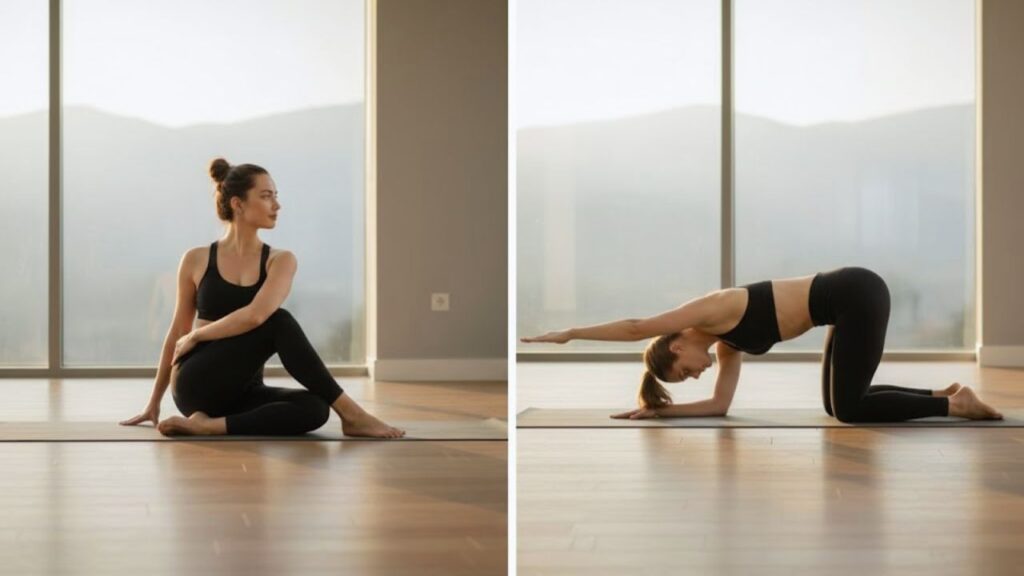
Seated Spinal Twist for a Looser, Healthier Back
Regular practice of this twist helps your spine move more freely and reduces back stiffness. The movement gently stretches the muscles around your spine. This can relieve tension that develops when you sit for extended periods.
Start by resting your hands on your knees or the armrests of your chair for light support while you move. Turn only as much as feels comfortable & never push yourself into a stretch that hurts. Your flexibility will get better naturally as you keep practicing this movement regularly.
Cat–Cow Flow to Wake Up the Spine Gently
Start by getting down on your hands and knees on the floor. From this base position you will move between two shapes. First round your back upward like a cat that feels threatened. Then reverse the movement by arching your back and letting your belly drop toward the floor. Continue switching between these two positions in a steady rhythm.
Child’s Pose for Deep Relaxation and Hip Ease
What it works: This pose targets your lower back & also helps stretch your hips and shoulders. This gentle resting position provides a deep stretch through your spine while releasing tension in your hip flexors and shoulder muscles. The forward fold naturally decompresses your vertebrae & creates space between each spinal segment. Your body weight gently encourages your thighs to sink toward your heels while your forehead rests on the ground. This creates a calming effect on your nervous system while simultaneously lengthening the muscles along your entire back body. The position also opens up your ankles & stretches the tops of your feet. Many people find this pose particularly helpful after long periods of sitting or standing. It serves as an excellent recovery position between more challenging yoga poses or exercises.
Start by sitting down and letting your bottom rest on your heels. After that stretch your arms forward or put them next to your body.
You can put cushions or a folded blanket underneath you if you want more support. This tip works well for people who are just starting out.
Thread the Needle Stretch to Open Shoulders Safely
The thread the needle stretch is an effective exercise that focuses on releasing tension in your upper back area while also working the shoulders and neck region. This gentle movement helps improve flexibility and reduces stiffness that often builds up from sitting at a desk or maintaining poor posture throughout the day. To perform this stretch you begin on your hands & knees in a tabletop position. Make sure your wrists are directly under your shoulders and your knees are hip-width apart. From this starting position you will slide one arm underneath your body while rotating your torso. Start by lifting your right arm off the ground and threading it through the space between your left hand and left knee. Your right shoulder and the side of your head should come to rest on the floor as you reach your right arm across to the left side. You should feel a gentle stretch developing across your upper back and between your shoulder blades. Hold this position for about twenty to thirty seconds while breathing deeply & steadily. The deep breathing helps your muscles relax more fully into the stretch. After completing the hold on one side return to the starting tabletop position and repeat the same movement on the opposite side by threading your left arm under your body. This stretch works particularly well for people who experience tightness in their upper back from computer work or other activities that involve forward shoulder positioning. The twisting motion helps mobilize the thoracic spine while the threading action creates a deep stretch through the muscles surrounding the shoulder blade. You can perform this stretch daily or whenever you notice tension building in your upper body. Some people find it helpful to do this movement in the morning to start the day with better mobility or in the evening to release accumulated tension from daily activities.
Seated Butterfly Pose for Flexible Hips and Inner Thighs
This exercise focuses on the muscles in your buttocks and hip area. When you perform this stretch regularly you will notice improved flexibility in your lower body. The glutes are among the largest muscle groups in your body and they need attention to stay healthy and functional. The hip joints connect your legs to your pelvis and allow for a wide range of movement. By stretching these areas you can reduce stiffness and discomfort that often builds up from sitting too long or from physical activity. This stretch is particularly useful for people who spend most of their day at a desk or who engage in running and cycling. To get the most benefit from this stretch you should hold each position for at least twenty to thirty seconds. Make sure you breathe steadily throughout the movement and avoid bouncing or forcing your body into uncomfortable positions. The goal is to feel a gentle pull in the target muscles without any sharp pain. You can do this stretch as part of your warmup routine before exercise or as a cooldown afterward. It also works well as a standalone activity when you need to relieve tension in your lower body. Consistency matters more than intensity when it comes to improving flexibility so try to include this stretch in your daily routine.
How to do it: Start by lying flat on your back on a comfortable surface. Bend both knees and keep your feet flat on the ground. Take your right ankle and place it on top of your left knee. Your right knee should point out to the side while your left foot stays planted. You can gently pull your left thigh toward your chest to deepen the stretch. Hold this position for about 30 seconds & then switch sides.
Reclined Figure-Four Stretch for Gentle Hip Mobility
How to do it: Start by lying flat on your back on a comfortable surface. Bend both knees & keep your feet flat on the ground. Take your right ankle and place it on top of your left knee. Your right knee should point out to the side while your left foot stays planted. You can gently pull your left thigh toward your chest to deepen the stretch. Hold this position for about 30 seconds and then switch sides.
Make sure to keep your raised foot flexed during the entire stretch. Pull your toes back toward your shin & hold them there. A flexed foot protects your knee joint from extra strain and helps you stretch effectively without getting hurt.
Knees-to-Chest Pose to Relax the Lower Back
This exercise focuses on strengthening and stretching the hip area along with the inner thigh muscles and lower back region. When you perform this movement regularly you can expect to build better flexibility in these connected muscle groups while also developing core stability. The hips are central to many daily activities and athletic movements. By targeting this area you improve your overall mobility and reduce the risk of injury during other exercises or everyday tasks. The inner thighs often get neglected in standard workout routines but they play an important role in leg strength and balance. Your lower back benefits from exercises that engage the hips and thighs because these areas work together as a functional unit. Strengthening the muscles around your hips takes pressure off your lower back and can help reduce discomfort from sitting or standing for long periods. To get the most benefit from this exercise you should focus on controlled movements rather than speed. Pay attention to your form and make sure you feel the engagement in the target areas. If you experience any sharp pain you should stop and reassess your technique or consult with a fitness professional. Start with a manageable number of repetitions and gradually increase as your strength improves. Consistency matters more than intensity when you are building foundational strength in these muscle groups. Over time you will notice improved posture and greater ease in movements that require hip flexibility.
How to do it
Hold onto the back of your thighs or grab your ankles. Then slowly push your hips open toward the outside.
Benefits
This position helps loosen tight hips & reduces the amount of pressure placed on your spine.
You can hold the back of your knees if reaching your feet feels too difficult when you are just starting out.
Happy Baby Pose for Stress-Free Hip Opening
This stretch gradually improves the flexibility of your hamstrings. It also produces a soothing effect on your nervous system and helps you feel more relaxed.
Seated Forward Fold to Lengthen the Spine Calmly
The standing forward bend is a fundamental yoga pose that primarily works the hamstrings while also engaging the back & shoulders. This simple yet effective stretch helps improve flexibility throughout the posterior chain of the body. When you perform this pose you fold forward from the hips and allow your upper body to hang down toward your legs. The hamstrings receive the most intense stretch as they work to support the forward fold. These large muscles along the back of your thighs often become tight from sitting or repetitive activities. Your back muscles also benefit significantly from this position. The entire spine lengthens as you fold forward which releases tension in the lower back & stretches the muscles along the vertebrae. This gentle traction can help relieve stiffness and promote better spinal health. The shoulders get involved as your arms hang down or reach toward the floor. This allows the shoulder joints to decompress and the surrounding muscles to relax. Many people carry stress in their shoulders and this pose provides a welcome release. To practice the standing forward bend you start in a standing position with your feet hip-width apart. You bend forward from your hips rather than rounding your back. Your knees can stay slightly bent if your hamstrings are tight. Let your head & neck relax completely and allow gravity to deepen the stretch. This pose works well as part of a warmup routine or as a way to cool down after exercise. It can also serve as a quick stress reliever during a busy day. Regular practice gradually increases your flexibility and helps maintain healthy muscle length in these important areas of the body.
This pose stretches your entire back from your heels all the way to your neck. It releases physical tension and helps calm your nervous system. Many people notice it reduces their mental stress & anxiety levels.
Beginner Tip for Stretching
When you stretch let your body weight do the work for you. Think of yourself as a heavy object that naturally sinks down toward the ground. Gravity is your friend here and will help you get a better stretch without any extra effort. Do not bounce up and down while you are stretching. This can actually hurt your muscles instead of helping them. Also avoid pushing yourself too hard or trying to force your body into a position it is not ready for yet. These aggressive movements can lead to injury and will slow down your progress. The best approach is to hold your position without moving. Find a comfortable stretch point and simply stay there. Focus on taking slow and even breaths while you hold the stretch. Your breathing should be calm and controlled throughout the entire movement. As you breathe and relax, you will notice your muscles gradually loosening up on their own. This natural process is much safer and more effective than trying to force results. Give your body time to adapt and you will see better improvements in your flexibility over the long term.
Creating Lasting Flexibility—One Comfortable Stretch at a Time
Flexibility develops slowly & cannot be rushed. Staying consistent and patient with your body produces better results than forcing quick progress. These basic yoga stretches create a solid foundation for improved movement and less tension over time. Keep practicing regularly and understand that each small step adds to your overall progress.