
Researchers looked at studies about how strength training affects running performance and running economy. They found that strength training does make runners more efficient. The research also showed which types of strength workouts work best for improving performance by comparing heavy weights with few repetitions against light weights with many repetitions and also looking at plyometric training and isometric exercises. Running economy is influenced by cardio fitness and running form but those are not the only things that matter. Research published in Sports Medicine shows that strength training can also play a big role in making you more efficient as a runner. However the specific way you train makes a difference.
Cristian Llanos-Lagos is a sports science researcher at Universidad Pablo de Olavide in Spain and the main author of the study. He told Runner’s World that the main point is simple. Runners need to add strength training to their running plans. But it is important to know that different strength training methods create different results and affect running economy differently depending on how good the athlete already is. Running economy is one of three key factors for distance running performance along with lactate threshold and VO2 max. Economy is not just about getting oxygen into your body but about using that oxygen well when you run at race pace.

The researchers examined 31 studies that tested how different strength training methods affect running economy. These methods included high loads which means heavier weights with fewer repetitions and plyometric training which involves explosive exercises. They also looked at sub-maximal load training that uses lighter weights with more repetitions. Some studies tested combined methods and isometric training where you contract specific muscles & hold them in one position. All the studies had control groups with people who did endurance running but no strength training. The total number of participants included 195 moderately trained athletes along with 272 well trained athletes and 185 highly trained athletes.
 Daily chest routine after 50 rebuilds muscle better than bench press and improves pressing control
Strength training to improve speed
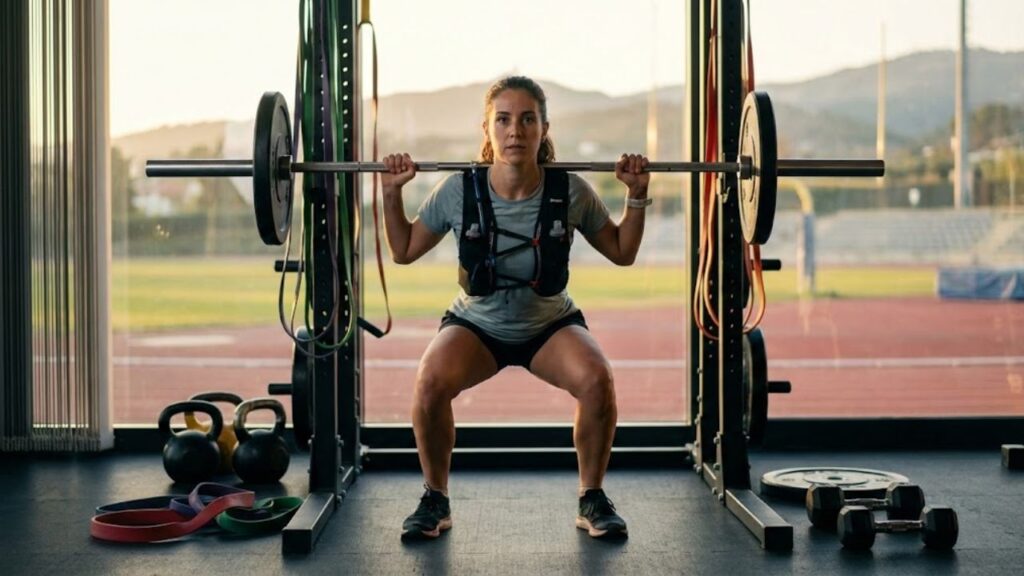
Researchers discovered that strength training with heavy weights and fewer repetitions helps mainly high-level athletes and people who run at fast speeds. This type of training improves how quickly the body can generate force in short bursts. Llanos-Lagos explained that heavy load strength training can make running more efficient by changing how the nervous system controls muscles and by making the lower legs stiffer. These changes affect how motor units are activated and how often they fire.

They also change the types of muscle fibers present. The result is better force development rate or how much force can be applied in a given time period. Understanding this matters because runners have limited time to apply force when their feet touch the ground during each stride. Athletes who can produce high force levels quickly can transition faster from the braking phase to the propulsion phase while running. This creates better muscle conditions that lead to improved running efficiency.

Strength training to improve endurance
Plyometric exercises for runners
Jump squats
Position your feet slightly wider than your hips. Lower yourself into a squat by bending at the hips and pushing your bottom back. Press your weight into your heels while keeping your back straight and chest up. Explode upward from the squat position and land on the front part of your feet. Continue repeating this movement. Jump lunges Place your right foot in front and left foot behind you. Make sure there is enough space between your legs so your front shin stays vertical when you lower down. Drop straight down into a lunge position. Push off explosively and switch your leg positions mid-air so your left leg moves forward and right leg goes back. Your arms can help drive the movement upward. Keep alternating legs with each jump.
Bounding
Start with your feet positioned at hip width. Drive off your left foot and leap forward as far as possible while landing on your right foot. Without pausing push off your right foot & jump forward again to land on your left foot. This exercise should resemble an exaggerated skipping motion moving forward.
Lateral hops Balance on one leg with a slight bend in your knee. Jump sideways back & forth as if you are jumping over an imaginary line on the ground. After completing your repetitions switch to your opposite leg & repeat the same movement pattern.
