
The email looks almost fake at first. “Live on a wild Scottish island, watch puffins and whales, €5,000 a month, free housing.” You picture yourself on a cliff at sunset, wrapped in a wool jumper, a cup of tea steaming in your hands while the Atlantic roars below. No commute, no neighbour drilling through your wall, no endless Slack notifications. Just sea, sky, and a bank account that finally breathes a little.
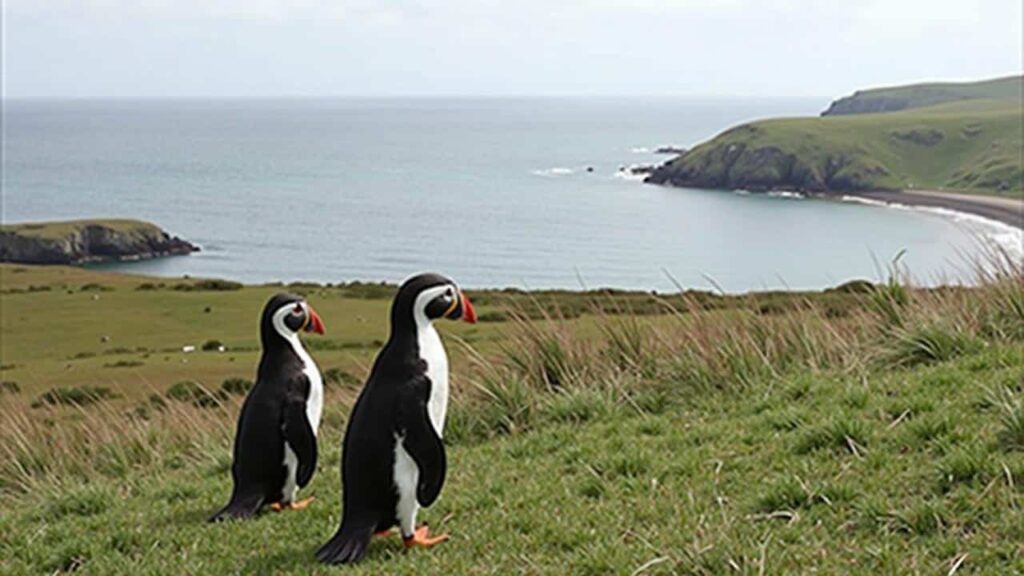
Then you read the small print. Six months of isolation. No bar on the corner, no Uber Eats, unstable Wi‑Fi, one small shop that closes at 4 p.m. A handful of people you don’t know yet, and very few ways to escape if you suddenly feel trapped. The dream job starts to look more like a psychological experiment.

The ad still goes viral, of course. Some call it paradise. Others call it madness.

Why this “dream job” electrifies people
First, there’s the fantasy. A remote Scottish island, puffins waddling like clowns on the rocks, whales surfacing in the distance, a salary that beats many city jobs and a house you don’t pay a cent for. It hits every tired nerve in people burned out by open‑plan offices and fluorescent lights. The job description almost reads like a revenge plot against modern life.

On social media, reactions are instant and extreme. One person writes: “I’d do this for free, are you kidding?” Another answers: “I’d last three days before crying into my instant noodles.” These roles tend to be for caretakers, guesthouse managers, or wildlife wardens, looking after a small estate, monitoring seabirds, keeping paths safe for the rare tourists who make it that far. The numbers are simple and seductive: six months, roughly €30,000, almost no expenses. For someone stuck in a minimum‑wage job, that’s life‑changing money.
The flip side emerges just as quickly. People who’ve actually lived on islands quietly drop in their comments. Winter storms that cut off ferries for days. Power outages that turn romantic candlelight into a chilly reality. The feeling when your phone drops signal and there’s no quick fix, no tech guy, just you and the wind howling at the windows. **The job isn’t just about watching puffins. It’s about confronting what happens when the noise of the world finally goes quiet.**
The real catch: isolation, routine, and your own head
The main task isn’t feeding the puffins or spotting whales. It’s managing your own rhythm in a place where days can blend like grey water. People who thrive in these roles develop a sort of island toolkit. They structure their time: a morning walk along the cliffs, set hours for maintenance tasks, scheduled breaks for reading or journaling, a fixed time to call family when the connection allows. Tiny rituals anchor them when the weather wipes out any other plan.
What trips many people up is the gap between the Instagram version of solitude and the Wednesday‑afternoon reality of it. You imagine epic hikes and dramatic skies; you get sideways rain and three days of dense fog. Your “office” might be an old stone building where the wind whistles through every crack. The work itself can be repetitive: checking paths, logging bird numbers, cleaning, doing inventories, sending reports once the internet cooperates. Let’s be honest: nobody really does this every single day with a permanent smile.
We’ve all been there, that moment when the thing you thought would save you from stress reveals a new kind of pressure. On an island, that pressure can be the silence. No café to disappear into, no quick drink with friends after a bad day. If you fall out with the three people sharing the island with you, there’s nowhere else to go. One former warden described it as “living inside your own mind with the volume turned up.” *For some, that’s healing; for others, it’s a nightmare they only understand once the boat has left.*
How to know if this wild offer is really for you
The first practical test is brutally simple: list what you’d actually do with your time there, hour by hour, for a normal Tuesday in November. Not the cinematic version, the ordinary one. Include maintenance tasks, reports, cleaning, cooking, reading, exercise. If that list makes you feel calm and curious instead of panicked or bored, you’re already closer to the right profile. People who love small, repetitive actions often do better on remote islands than hardcore thrill‑seekers.

Next comes your emotional safety net. Before sending an application, talk honestly with one or two friends who know your bad days, not just your Instagram highlights. Ask them how they think you handle loneliness, frustration, and long stretches without novelty. There’s no shame in admitting that you need a city’s hum to feel alive. The big mistake is treating the island like an escape from all your problems. Distance amplifies things; it doesn’t erase them. **If you already feel fragile, isolation can act like a magnifying glass.**
The people who’ve done this kind of job often share a similar warning and a similar joy.
“Out there, there’s nowhere to hide from yourself,” one former island caretaker told me. “But if you’re ready for that, it gives you a kind of quiet you don’t find anywhere else.”
They usually recommend three concrete preparations:
- Arrive with a clear daily routine written down before you set foot on the island.
- Bring more offline hobbies than you think you’ll need: books, notebooks, sketchpads, small instruments.
- Agree on communication rituals with loved ones: fixed call days, letters, even voice messages to send when the signal returns.
These small anchors turn the six months from a test of endurance into an experiment in a different way of living.
A job, a fantasy, or a mirror?
This offer, with its €5,000 a month and free housing among puffins and whales, divides opinion because it touches a raw nerve. It asks what we really want when we say we dream of “escaping”. Is it fresh air and time to breathe, or is it a life where we don’t have to face our own restlessness? The remote Scottish island becomes less a workplace and more a mirror: of how connected we are to others, of how much noise we need to feel okay, of what we’ll trade for money and a good story to tell later.
Some people will read the ad and feel instant dread. They need crowds, lights, late‑night food, the possibility of deciding at 9 p.m. to go see a movie or meet someone new. Others feel their shoulders drop just imagining the vast horizon, the slow pace, the chance to live half a year without the constant buzz of push notifications. Both reactions are valid. Both reveal something intimate about our relationship with solitude, work, and the spaces we inhabit.
This “dream job with a catch” won’t fix a broken life, and it won’t magically turn anyone into a different person. It might, though, offer exactly what modern life rarely gives: six months to see who you are when the usual noise fades away. Maybe that’s the real salary, hidden behind the puffins and the storms.
| Key point | Detail | Value for the reader |
|---|---|---|
| Beyond the fantasy | High pay and free housing come with isolation, routine, and harsh weather | Helps you judge if the real conditions fit your personality, not just your daydreams |
| Profile that thrives | People who enjoy structure, solitude, and simple daily rituals adapt best | Offers a mental checklist to see if you’re more likely to grow or struggle |
| Preparation matters | Routines, offline hobbies, and planned communication are essential | Gives concrete steps to turn a risky leap into a meaningful experience |
FAQ:
- Question 1Is the €5,000 salary really “worth it” for six months on a remote island?
- Question 2What kind of work do these Scottish island jobs usually involve day to day?
- Question 3How bad is the isolation in practice if I’m used to city life?
- Question 4Can this kind of job help with burnout or will it make things worse?
- Question 5What should I realistically bring or plan before accepting such an offer?
