
The smell hit her before she even saw the difference. Marta was on all fours in the bathroom, pink cleaning gloves halfway rolled down, squinting at the grout between the tiles. Ten minutes earlier, it had been a dull gray, almost black in places. Now, with a few quick strokes of a toothbrush dipped in a foamy paste, the lines were turning bright, almost new, like a before-and-after ad on social media.
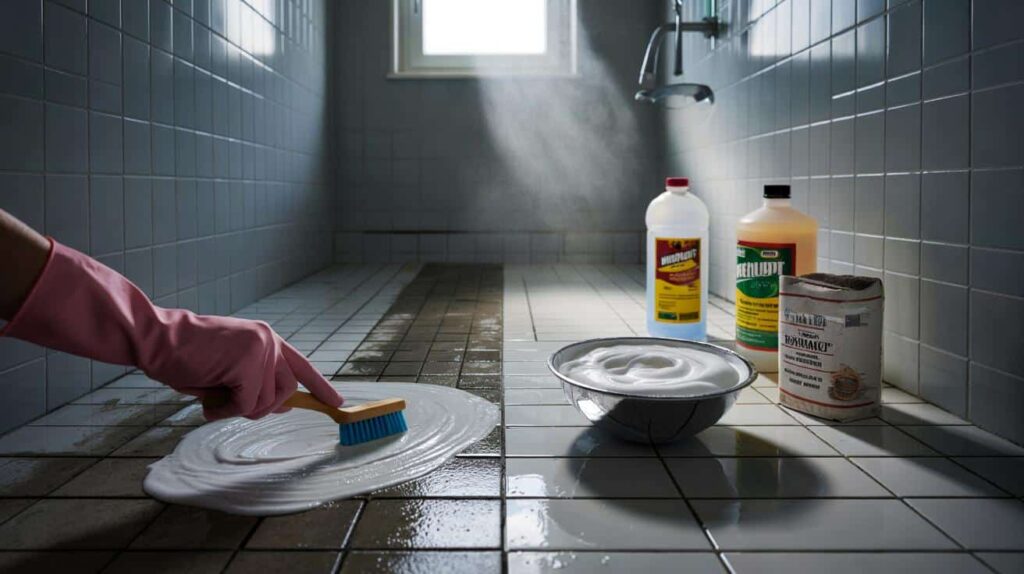
She coughed once, waved a hand in front of her face, and laughed it off. “Worth it,” she thought, eyes watering just a little.

Fifteen minutes, three ingredients, sparkling grout.

And in the air, something she couldn’t see.

The viral 3-ingredient grout trick everyone is whispering about
If you spend any time on cleaning TikTok or Reels, you’ve seen it: the “magic” grout recipe. A bowl, three household products, a quick stir, and that oddly satisfying moment when dingy lines between tiles suddenly look like fresh caulk.
The promise is seductive. No expensive spray. No pro cleaning. Just a DIY potion grabbed from the kitchen cupboard and laundry shelf.
One creator promises, “Your grout will shine in 15 minutes.” Another says it “melts dirt like butter.” Views climb into the millions.
The basic version goes like this: baking soda, a splash of bleach, a dash of dish soap. Some people add vinegar. Others swap bleach for hydrogen peroxide, or throw in a multi-surface cleaner “for power.”
They smear the paste over grout with a brush, let it sit, then scrub and rinse. The before-and-after shots are dramatic. Yellowed grout turns crisp and white under the foam.
Comments roll in: “Game-changer!” “Where has this been all my life?” “My bathroom smells like a pool but I don’t care.”
There’s a reason these mixtures “work.” Baking soda is mildly abrasive, great for scrubbing away grime. Bleach is a serious stain remover, especially on mold marks. Dish soap breaks down greasy residue from shampoos and body products.
On a chemical level, they’re doing exactly what you want: loosening dirt, bleaching stains, cutting through soap scum. That satisfying fizz, that strong smell, the instant whitening — it all feels like proof that the mixture is powerful.
Yet that same power, especially when mixed with other products, can easily cross the line into dangerous territory.
Where sparkle ends and toxic fumes begin
The real tension starts when people begin “improvising.” A bit of bleach here, a splash of vinegar there, a capful of toilet cleaner “for extra oomph.” Those tiny tweaks can turn a clever hack into a mini chemistry lab on your bathroom floor.
Vinegar and bleach, for example, are a notorious couple. Mixed together, they can release chlorine gas, an irritant that attacks your lungs and eyes. That burning feeling in your nose or throat? It’s not just “strong cleaning power.”
In a cramped bathroom with poor ventilation, a few minutes of that cocktail can be more than your body signed up for.
Poison control centers quietly know this story by heart. A parent calls because they “cleaned the shower with bleach and something else” and now they’re coughing, dizzy, and their eyes won’t stop watering. A young renter scrubs grout with a homemade mix while the window is closed and ends up sitting on the edge of the tub, gasping for air.
These aren’t edge cases from a lab report. They’re Tuesday afternoons. The World Health Organization has long warned that indoor air pollution from cleaning products can be serious, especially in small, enclosed spaces like bathrooms.
Most of the time people get away with it. So the trick spreads.
When certain ingredients touch, they don’t just add their strengths — they create new substances. Bleach and vinegar can release chlorine gas. Bleach with ammonia (present in some glass or bathroom cleaners) can form chloramine gases. Both can trigger coughing, chest tightness, and shortness of breath.
Even “milder” combos can irritate the airways if the room is small and the exposure is repeated. The grout looks great, but your lungs have quietly taken a hit.

Let’s be honest: nobody really reads the tiny warning labels on the back before mixing their own miracle paste.
How to clean grout fast without turning your bathroom into a gas chamber
There’s a safer way to chase that 15-minute sparkle. Start with a simple paste: baking soda and water, thick enough to cling to the grout. Smear it along the lines with an old toothbrush.
Spray lightly with plain hydrogen peroxide, let it sit for 5–10 minutes, then scrub. This combo lifts stains, kills many surface germs, and brightens grout without that harsh pool smell.
Open a window, run the fan, and avoid crouching with your face inches from the paste the whole time.
If you really want the power of bleach, use it solo, diluted, and with respect. One small splash in a bucket of water, applied with a sponge or brush, is plenty for whitening grout. Never add vinegar, toilet cleaner, or “just a bit of everything” on top.
We’ve all been there, that moment when the mess looks so stubborn you’re tempted to throw half the cleaning cupboard at it. That instinct is human — and exactly what gets people into trouble.
Better to clean twice gently than once while breathing something that makes your chest tight for the rest of the day.
Experts tend to sound boring until you realize they’re just describing what they see all the time.
Dr. Laura Mendes, a pulmonologist in Lisbon, put it bluntly: “Most people underestimate cleaning fumes because they’re ‘just doing the bathroom.’ But chlorine or mixed-gas exposure in a small room can irritate the lungs like a bad chest infection. You might not connect that cough to the grout you scrubbed last week.”
To stay on the safe side, think of a simple mental checklist:
- Use one strong chemical at a time — no freestyle mixing
- Open windows and doors, and run the exhaust fan if you have one
- Wear gloves, and avoid breathing right above the grout line
- Test a small patch first instead of coating the entire floor
- Rinse well and leave the room to air out before staying inside
*A clean bathroom is not worth a burning chest or a splitting headache.*
Shiny grout, hidden risks, and the choices we make at home
The story of those three magical ingredients is really the story of how we treat our homes and our bodies. We want quick, visible results. We want that satisfying TikTok moment, the pristine grout that says “I’ve got my life together,” even if the rest of the house is a little chaotic.
Brands and algorithms reward anything that transforms “disgusting” into “perfect” in under 30 seconds. What the camera never shows is the smell, the sting in the throat, the slightly dizzy step out of the bathroom.
There’s no villain here. Just habits, shortcuts, and a quiet belief that if something is sold in a supermarket, it can’t be that bad. Many people will keep mixing their three-ingredient recipes and swear by them. Some will get away with it for years.
Others will pay with a nasty coughing fit, or a panicked call to a doctor when breathing suddenly feels strange.
Between spotless grout and safer lungs, the choice looks obvious on paper. In real life, it slips through our fingers in the rush of a Sunday clean.
Next time you see that viral hack, you might still feel tempted to try it. Maybe you will, but with the window wide open and one ingredient less. Maybe you’ll share a gentler recipe in the comments instead of the harsh one everyone’s pushing.
Sometimes the healthiest thing we can do at home is slow down just a little, ask what’s really in that bowl, and remember that not all shine is harmless.
The grout will always need scrubbing again. Your lungs don’t get that kind of reset.
| Key point | Detail | Value for the reader |
|---|---|---|
| Mixing cleaners can create toxic gases | Bleach with vinegar or ammonia may release lung-irritating fumes | Helps avoid dangerous DIY mixtures when following viral hacks |
| Safer 3-ingredient approach exists | Baking soda, water, and hydrogen peroxide lift stains without harsh fumes | Offers a practical method for bright grout with lower health risk |
| Ventilation and protection matter | Open windows, use fans, wear gloves, and step out while products sit | Reduces irritation, headaches, and respiratory problems during cleaning |
FAQ:
- Question 1Can I mix bleach and vinegar for extra-strong grout cleaning?
- Answer 1No. Mixing bleach and vinegar can release chlorine gas, which irritates the eyes, nose, and lungs, especially in small bathrooms.
- Question 2What’s a safer 3-ingredient grout cleaner?
- Answer 2A paste of baking soda and water, sprayed or dabbed with hydrogen peroxide, then scrubbed with a brush is a safer, effective combo.
- Question 3Why do I feel dizzy or get a headache after cleaning grout?
- Answer 3Strong fumes from bleach or mixed products can irritate your airways and affect how you feel, especially without good ventilation.
- Question 4Are “natural” cleaners always safe to mix?
- Answer 4Not always. Even vinegar or essential oils can interact with other products in unexpected ways; use one main cleaner at a time.
- Question 5How often should I deep-clean grout to avoid harsh chemicals?
- Answer 5Light, regular cleaning with milder products every few weeks keeps grout from getting so stained that you feel forced to use aggressive mixes.
