
At 4 p.m., the garden looks like it should give up. The lawn is crisp, the hydrangeas sulk, and even the cat has negotiated a truce with the blazing patio stones. Yet in the middle of all that baked, tired green, one shrub is buzzing with life. Tiny wings flicker over it like animated confetti. Orange, lemon-yellow, electric blue – a steady whirl of butterflies that somehow don’t care that the thermometer is flirting with 100°F.
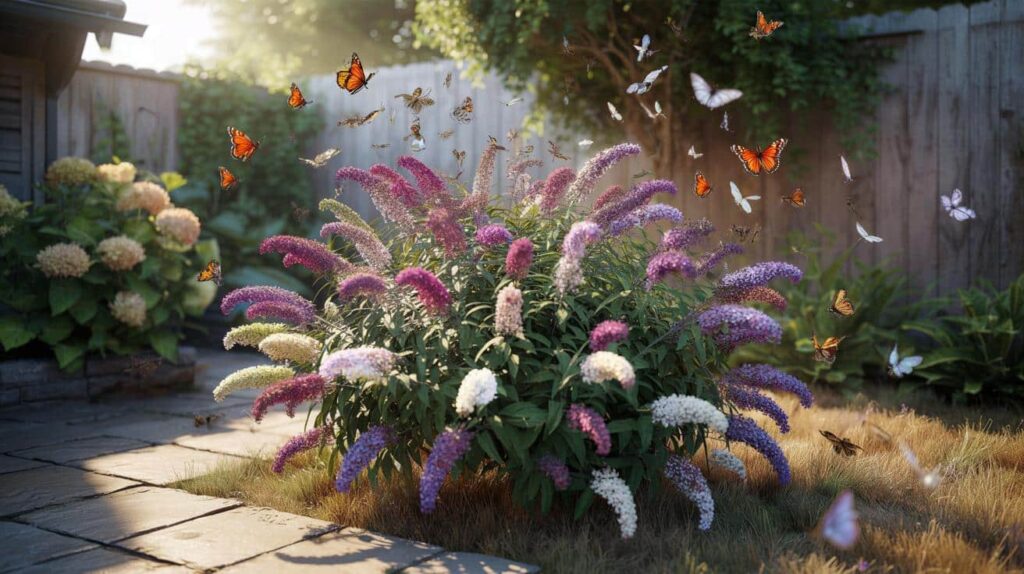
The air above it shimmers, hot and humming.

Neighbors slow down as they pass, shading their eyes, asking the same question from the sidewalk.

“What on earth is that plant?”

The shrub that laughs at heat and calls in butterflies
That scene plays out every summer around one hardy star: the butterfly bush, or Buddleja. It doesn’t look like much in early spring, just a bristly shrub shaking off winter. Then the heat arrives, other plants start complaining, and this one wakes up like it’s been waiting all year for exactly this kind of weather.
Long, scented flower spikes appear almost overnight, dripping with purple, white, pink, or even deep orange blooms.
The hotter the pavement gets, the more butterflies seem to find it.
Spend ten quiet minutes next to a well‑established butterfly bush in July and it feels like sitting in the middle of an airport for pollinators. Red admirals hover and loop. Painted ladies land with the delicate confidence of seasoned travelers. Hummingbird moths dart in so fast your brain needs a second to understand what just flew past your nose.
One gardener in Arizona told me her Buddleja “looks like it’s on fire with wings” by mid‑afternoon.
She stopped counting species at twelve, gave up, and just started filming.
There’s a simple reason this plant thrives when others flop. Buddleja sinks its roots deep, then asks for very little. Once settled, it hardly blinks at drought, poor soil, or reflected heat from concrete. Those long flower panicles keep producing nectar day after day, even when the sky has forgotten what rain looks like.
For butterflies and bees, that’s a buffet that doesn’t shut down when the rest of the garden closes early for the summer.
For humans, it’s a low‑maintenance way to turn a sun‑blasted corner into a living, fluttering show.
How to turn a hot corner into a butterfly magnet
The basic move is simple: pick the sunniest, harshest spot in your yard and give the butterfly bush that territory. Full sun for at least six hours is where it shines. Dig a hole twice as wide as the pot, loosen the roots a bit, and backfill with the same soil you just took out, not fancy bags of mix.
Water deeply the first few weeks, then pull back and let the plant toughen up.
This is one shrub that actually likes being treated less like a houseguest and more like a roommate who can cook their own meals.

Lots of people overcomplicate Buddleja and get frustrated. They baby it with constant fertilizer, then wonder why it turns into a lanky tangle that flops over after rain. Or they plant it in rich, soggy soil “to help it along” and watch it slowly sulk itself to death.
Let’s be honest: nobody really follows watering schedules perfectly during a heatwave.
So lean into the plant’s strengths. Less frequent but deep watering beats a daily sprinkle. Good drainage beats pampering. And yes, you can forget a day or two without waking up to guilt in a flowerpot.
Most gardeners who fall in love with this shrub have a tipping point — that one afternoon where the butterflies are just too many to ignore. One British grower told me:
“I planted it because the label said ‘butterfly bush’ and I thought, why not. By the third summer, I couldn’t hang laundry without brushing wings off my arms.”
To keep things both beautiful and responsible, a few habits help:
- Choose sterile or low‑seed varieties in regions where Buddleja can spread.
- Deadhead spent blooms so it keeps flowering without seeding everywhere.
- Offer host plants too (milkweed, nettles, violets) so butterflies can raise their young nearby.
- Skip pesticides on and near the shrub, even “gentle” ones, so the buffet stays safe.
- Prune hard in late winter to keep the plant compact, fresh, and blooming low enough to enjoy up close.
Living with a cloud of butterflies all summer long
There’s a small shift that happens when you share space with a plant that doesn’t panic each time the forecast threatens triple digits. The butterfly bush becomes a kind of visual exhale in the yard: a reminder that not everything fragile disappears when the weather gets harsh. It’s oddly grounding to watch something stand its ground in that kind of heat.
We’ve all been there, that moment when you step outside, feel the air hit you like a wall, and wonder why you even bother with plants at all.
Then you catch a flicker of color above a flower spike and forget, for a second, how hot you are. Maybe you sit down. Maybe you call someone over just to point and say, “Look at this, right now.” The butterflies won’t pose on cue, the wind will mess up your photos, and the shrub will keep blooming regardless.
*That’s the plain, easy magic of this plant: it just does its thing, and everything else finds it.*
It doesn’t need a curated garden around it. It makes its own story.
Ask people why they planted Buddleja, and they rarely talk about soil pH or growth rates. They talk about childhood summers, grandparents’ gardens, balconies turned into tiny sanctuaries. They talk about kids trying to name every butterfly they see, or quiet evening walks where the buzzing and fluttering sound almost louder than the nearby road.
A single **heat‑proof shrub** at the back of a parking‑lot‑style yard can change how the whole place feels. An urban balcony with one compact variety can pull in pollinators from three floors down. A row of them along a fence can turn a bare property line into a little migration corridor.
The plant survives the scorch, and the butterflies tell everyone where the oasis is.
| Key point | Detail | Value for the reader |
|---|---|---|
| Choose the right spot | Full sun, well‑drained soil, room for the shrub to reach its adult size | Gets a tough, reliable plant instead of a stressed, straggly one |
| Low care, big reward | Deep but infrequent watering, hard winter pruning, light or no fertilizer | Saves time and water while still enjoying long, fragrant bloom spikes |
| Butterfly‑friendly habits | Safe varieties, no pesticides, nearby host plants, regular deadheading | Turns a hot corner into a genuine wildlife haven, not just a pretty shrub |
FAQ:
- Question 1Is butterfly bush really that heat‑tolerant?
- Answer 1Yes, once established. It thrives in full sun and copes well with high summer temperatures, especially if the soil drains well and roots had time to develop.
- Question 2Does it attract anything besides butterflies?
- Answer 2Definitely. Bees, hoverflies, and sometimes hummingbirds visit the nectar‑rich blooms, turning the shrub into a general pollinator hotspot.
- Question 3Will one plant be enough for my small yard or balcony?
- Answer 3One well‑placed compact variety can be plenty. Even a single pot on a sunny balcony rail can pull in butterflies if you’re in their flight path.
- Question 4Is butterfly bush invasive where I live?
- Answer 4In some regions, yes. Check local guidelines and look for **sterile or low‑seed cultivars** marketed as non‑invasive alternatives.
- Question 5Do butterflies need other plants too?
- Answer 5Yes. Butterfly bush feeds adults, but they lay eggs on specific host plants. Pair it with milkweed, dill, fennel, nettles, or violets depending on the species you want to support.
