The first time I saw it, the box was bigger than my microwave.
A slick, matte-black “smart cooker” on the shelf, promising nine functions in one: air fry, roast, steam, sauté, slow cook, pressure cook, bake, dehydrate, reheat. A tiny spaceship for the countertop, whispering: “You’ll never really cook again.”
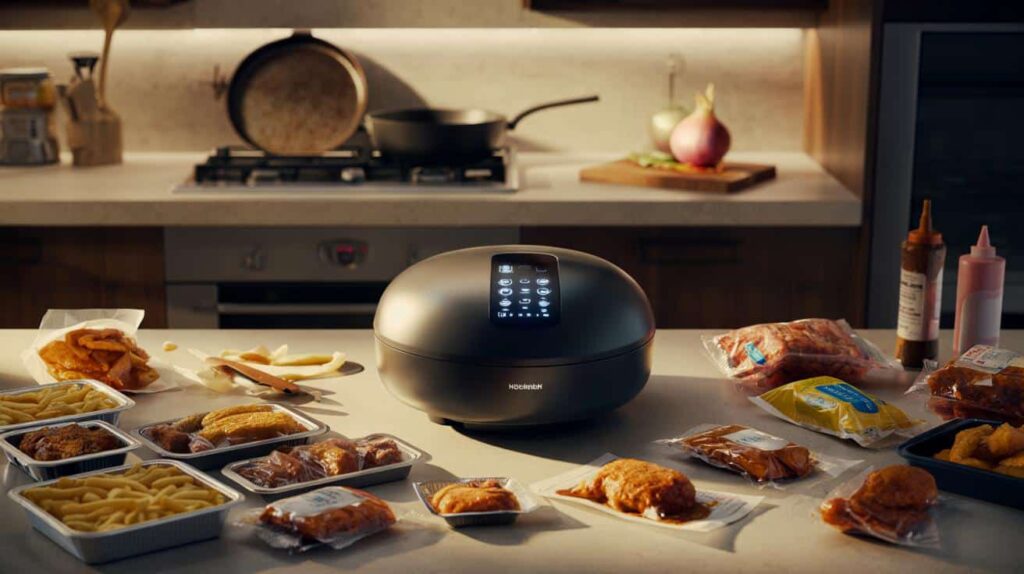
A week later, my friend Emma sent me a photo of the same machine on her kitchen island. Next to it, her old cast-iron pan sat abandoned like a retired worker.
The nine-function revolution had quietly moved in.
And something older, slower, more human was sliding out the back door.
From miracle gadget to silent takeover of the kitchen
Scroll any social feed and this nine‑function all‑in‑one is everywhere.
Recipes sliced down to “Dump, press Start, walk away.” Perfectly browned “roast chicken” in 18 minutes. Brownies in the same pot you cooked your curry in yesterday.
You can feel the seduction. No greasy pans, no hovering over the stove, no waiting for the oven to preheat. Just one glossy cube promising weekday salvation.
The pitch is seductive: this isn’t just replacing your air fryer, it’s replacing your entire kitchen.
A few months ago, I watched a young couple in a small city apartment unpack theirs like a new pet.
The guy explained, half proud, half sheepish, “We don’t really have an oven… this will do everything.” The first week, they were euphoric. Frozen fries, chicken wings, teriyaki salmon, banana bread. All in the same drum.
By week four, their groceries had quietly shifted. Less fresh vegetables, more “air-fryer-ready” nuggets. Pre-marinated meats in vacuum packs. Sauces from squeeze bottles.
Their shelves looked like the pantry aisle of a gas station, just more expensive.
That’s the twisted genius of this gadget. It doesn’t just speed up cooking, it changes what we buy and how we think about food.
When the default becomes “What can I toss in there and forget?”, you slowly move away from peeling, chopping, tasting. Away from recipes that need a pan to brown, a pot to simmer, a tray to slowly crisp in the oven.
*You stop learning new skills because the machine already “knows” what to do.*
The air fryer once nudged us to play with real ingredients.
This new nine‑in‑one box pushes us toward food that comes pre-optimized for a preset button.
How to use the gadget without letting it kill your real cooking
There is a way to live with this thing without surrendering your kitchen soul.
Think of it as an assistant, not the chef. That means deciding, before you even press a button, what part of the cooking process you want to keep human.
Use the pressure or steam function for beans, grains, or tougher cuts of meat that genuinely benefit from long, slow heat condensed into less time. Then finish on a pan or in the oven.
Let the nine-function box do the boring part.
You handle the fragrant, hands-on, “this tastes right now” part.
The trap is obvious: once you realize you can “set and forget” dinner, you kind of want to forget everything.
We’ve all been there, that moment when you’re tired and the idea of chopping an onion feels like a life decision.
That’s when this gadget stops being a tool and starts being a crutch.
On those nights, choose a tiny act of cooking anyway. Slice one clove of garlic to throw into the pot. Toss fresh herbs over whatever comes out. Reheat leftovers in a pan once a week, just to remember how heat feels when you control it.
Let’s be honest: nobody really does this every single day.
But if you can reclaim three dinners a week from the robot, your skills and senses stay awake.
“Ever since we got the multi-cooker, my teenagers think food just appears after a beep,” a home cook in Manchester told me, laughing, then pausing. “The scary part is, they’ve stopped asking how anything is made.”
- Keep at least one “analog night”
Once a week, cook with no presets. One pan, one pot, or just the oven. Even if it’s just roasted vegetables and eggs, it resets your instincts. - Use the gadget as a prep partner, not the star
Let it cook beans, stock, or base grains on Sundays. Then, during the week, you reheat, spice, and assemble proper meals around those building blocks. - Resist the frozen aisle creep
If you buy frozen fries and breaded chicken “for the air fryer,” you’ll eat like that. Stock your fridge for the cook you want to be, not the cook your gadget assumes you are. - Protect one old tool you love
A cast-iron pan, a battered baking tray, a wooden spoon. Use it regularly. That object becomes your anchor to the kind of cooking no screen can replace. - Teach one real recipe alongside every “hack”
If you show your kids or partner how to use the gadget, also show them how to make the same dish once on the stove or in the oven. Two paths, one meal.
The quiet cost of convenience on taste, memory, and identity
The danger isn’t that a nine‑function gadget exists.
The danger is what disappears when we stop noticing what it slowly replaces. The smell of onions catching slightly in butter because you turned away a second too long. The conversation that happens while someone stirs at the stove and someone else sets the table. The running family jokes about “Grandma’s oven that ran too hot.”
Those things don’t come with a timer.
You can’t schedule them on a digital display.
| Key point | Detail | Value for the reader |
|---|---|---|
| Gadgets shape habits | The nine‑function cooker pushes us toward presets and processed foods | Helps you see why your shopping list and cooking style are subtly changing |
| Use it as a tool, not a replacement | Combine pressure/steam functions with pan or oven finishes | Lets you save time without losing flavor, skill, or control |
| Protect real cooking rituals | Keep one “analog night” and one favorite traditional tool in rotation | Preserves your identity as a cook, not just a machine operator |
FAQ:
- Question 1Is this new nine‑function gadget really worse than an air fryer?
- Question 2Can I still be a good cook if I use it several times a week?
- Question 3What kind of recipes suffer most when moved into a multi‑cooker?
- Question 4How do I stop relying on presets for everything?
- Question 5Is there a way to involve kids so they learn real cooking, not just buttons?