
Across France and much of Europe, winter means rushed trips for seed bags and fat balls. In Japan, the same cold season brings almost the opposite reaction: people step back, let the landscape do the work, and trust birds to fend for themselves.
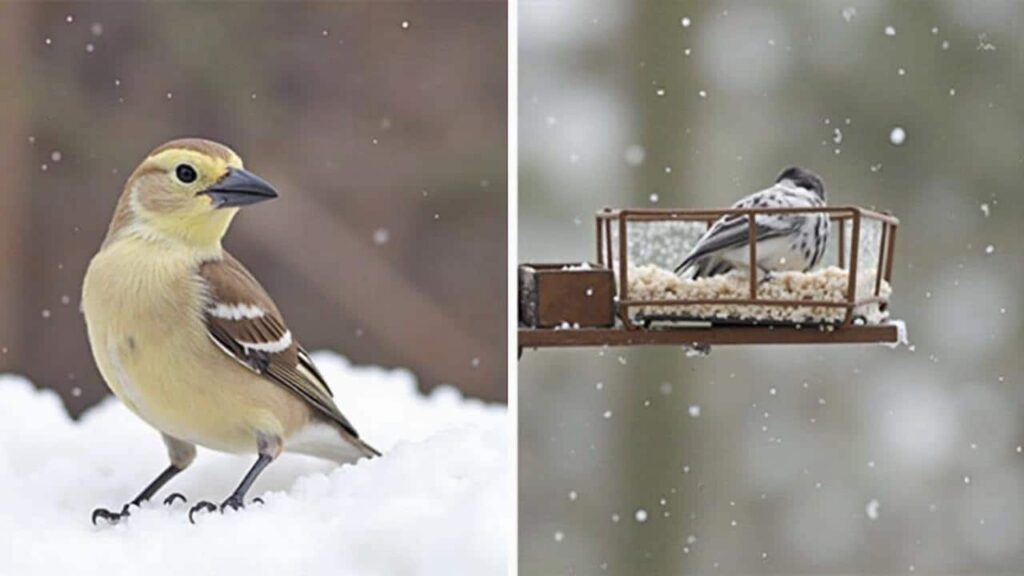
Europe’s winter bird buffets face an uncomfortable question
In France, the UK and many other countries, backyard feeding has become a comforting winter ritual. Garden centres promote it, DIY stores dedicate aisles to it, and social media fills with photos of blue tits and robins on neatly designed feeders.

The logic feels unshakeable: temperatures drop, insects vanish, snow covers the ground, so humans step in with help. Sales of sunflower seeds, suet blocks and peanut mixes spike as people try to “save” garden birds from starvation.

Feeding birds has turned many gardens into all-you-can-eat buffets — generous, but not necessarily smart for wildlife.

Yet concentrating food in one spot changes how birds behave. Instead of ranging across hedges, meadows and woodland, they flock to one reliable source. When the feed is high in saturated fat and low in variety, it can resemble junk food more than a balanced diet.
Behind the cosy scene of a busy feeder lies an awkward idea: the belief that without human intervention, birds simply cannot cope with winter. Evolution tells a different story. These species have survived ice ages, long freezes and food scarcity for thousands of years.
Why Japan largely refuses to feed wild birds
Against this European backdrop, the Japanese approach feels almost brutal at first glance. In most regions of Japan, people do not routinely feed wild birds in gardens or public spaces, even in harsh winters.
This choice is not driven by indifference. It stems from a deep-rooted philosophy that mixes ecology, restraint and respect for autonomy. A key idea, influenced by concepts similar to “wu wei” or non-forcing, is that constant human help weakens the natural strength of wild animals.
In the Japanese view, wild birds keep their dignity when they are not turned into regular customers at a human-run canteen.
If a bird knows that food falls from a feeder every day at the same time, it may shift energy away from foraging skills. Why spend hours searching for hidden seeds, berries or insects if a handful of peanuts is guaranteed at 8am?
Japanese conservation thinking treats that shift as a problem. Help that looks kind might erode the very abilities that allow populations to survive bad winters, storms or future habitat changes. The priority is to let natural resilience do as much of the job as possible.
Feeder hotspots: disease and risky dependence
Beyond philosophy, there is biology. A modern bird feeder is a crowded meeting point for species that would normally spread out across a wide area. Beaks, droppings and feet all touch the same perches and trays repeatedly.
This is ideal for pathogens. Outbreaks of trichomonosis in finches and salmonella in garden birds have both been linked to concentrated feeding spots in Europe. Dirty feeders, damp seed and mouldy fat balls intensify the risk.
In nature, most birds do not queue shoulder to shoulder for food — our feeders force them into unnatural proximity.
There is another, quieter effect: migration and movement patterns can shift. Some species that would normally move south or change altitude for winter may decide to stay put, tempted by a constant supply of easy calories.
That looks fine as long as the food keeps coming. But life gets in the way. People go on holiday, run out of seed, get sick, or simply forget. Birds that have become less mobile and less skilled at searching can suddenly face a bare, frozen landscape with no backup.
The Japanese alternative: feeding the garden, not the birds
The method that divides opinion in France does not mean doing nothing. It means switching effort from bags of seed to the plants and structures that naturally feed wildlife year after year.
 Parents who say they love their kids yet refuse to do these 9 things are pushing them away
Instead of hanging more feeders, Japanese-style thinking would encourage homeowners to create what some ecologists call a “living pantry”. The menu is written in branches, seedheads and leaf litter rather than in product labels.
Plants that turn your plot into a natural winter larder
- Berry shrubs: Holly, pyracantha, cotoneaster and ivy provide dense cover and fruit that lasts well into winter.
- Forgotten fruit: Apples and pears left on the tree or on the ground feed thrushes, blackbirds and fieldfares.
- Uncut perennials: Dried heads of sunflowers, coneflowers and teasel hold seeds that finches relish.
Leaving a garden slightly untidy plays a central role in this strategy. Piles of logs, heaps of leaves and rough corners create shelter for beetles, spiders and larvae. Those insects form the protein-rich meals that birds need most to stay warm and rebuild muscle.
| Conventional approach | Japanese-inspired approach |
|---|---|
| Buy seed and fat balls each winter | Plant shrubs and perennials that feed birds for years |
| Concentrate birds at a single feeder | Spread food sources across the whole garden |
| Risk of disease build-up | Lower density, fewer transmission hotspots |
| Short-term help, ongoing cost | Long-term habitat improvement, no annual shopping rush |
From bird-feeder to habitat guardian
Adopting this method demands a quiet shift in identity for gardeners. Instead of acting as vital food providers, they become caretakers of structure, shelter and diversity.
You might see fewer birds pressed up against the kitchen window, but those that pass through are fitter, leaner and less tied to your timetable. They forage in bark crevices, under hedges and among seedheads, completing behaviour patterns that feeders often disrupt.
The goal is not to attract the maximum number of birds to one spot, but to ensure they do not need you in the first place.
It also changes the rhythm of work. Rather than cutting everything back in autumn for a tidy look, you leave stalks standing, keep a messy corner and postpone major pruning until late winter. The garden looks wilder, but life in it runs deeper.
How far should you go? A realistic middle ground
For many Europeans, going “full Japanese” and abandoning winter feeding overnight feels too abrupt. Some species, especially in heavily urbanised areas, already rely heavily on human help after decades of habit and habitat loss.
A gradual shift can still reduce risks:
- Cut back on the number of feeders and keep only one or two, cleaned regularly.
- Use higher-quality seed mixes and avoid cheap, very fatty blocks that offer calories but little else.
- Commit to consistency: once you start feeding in a severe cold spell, continue until conditions ease.
- Each year, replace a portion of your budget for feed with new shrubs, trees or perennials.
This blend respects local realities while moving closer to a self-sustaining system. The Japanese lesson here is less a strict rule and more a question: “What can the landscape do on its own, if I give it the right tools?”
Key concepts and practical scenarios
Two ideas sit at the heart of this debate: dependence and resilience. Dependence appears when wildlife changes behaviour because of predictable human inputs. Resilience appears when species can absorb shocks — a late frost, a failed berry crop, a storm — and still recover.
Imagine two villages. In the first, most gardens run several feeders, cleared out every weekend and occasionally left empty when owners travel. In the second, people have planted dense hedges, berry bushes and fruit trees, leaving dead wood and messy corners.
A long cold snap hits. In village one, birds cluster around a few houses, then struggle when one family goes away. In village two, flocks move in loose patterns from hedge to hedge, tapping many small resources. The second setting mirrors the Japanese logic: spread risk, maintain skills, and avoid turning your kindness into a single point of failure.
There are trade-offs. Feeding gives close views and emotional rewards, which often translate into more public support for conservation. Shifting towards habitat can feel less immediate. Yet over time, it quietly stabilises bird populations rather than just entertaining human observers.
For French and other European gardeners used to the comforting rattle of seed in a plastic tube, the Japanese method may sound almost provocative. Its core message is simple, though: help birds by building a richer, rougher, more generous landscape — and then step back, even when the frost bites hardest.
