
The floor feels cool against your forearms while your toes press into the mat. Your legs tighten & your breathing finds a steady pace. As you hold the position and concentrate you might wonder how long you should stay in this plank. Your core strength is essential for protecting your spine & helping you move whether you are 18 or 68. The correct amount of time to hold a plank depends on knowing where your body is right now and respecting what it can handle without causing pain.
The Hidden Strength of Your Core
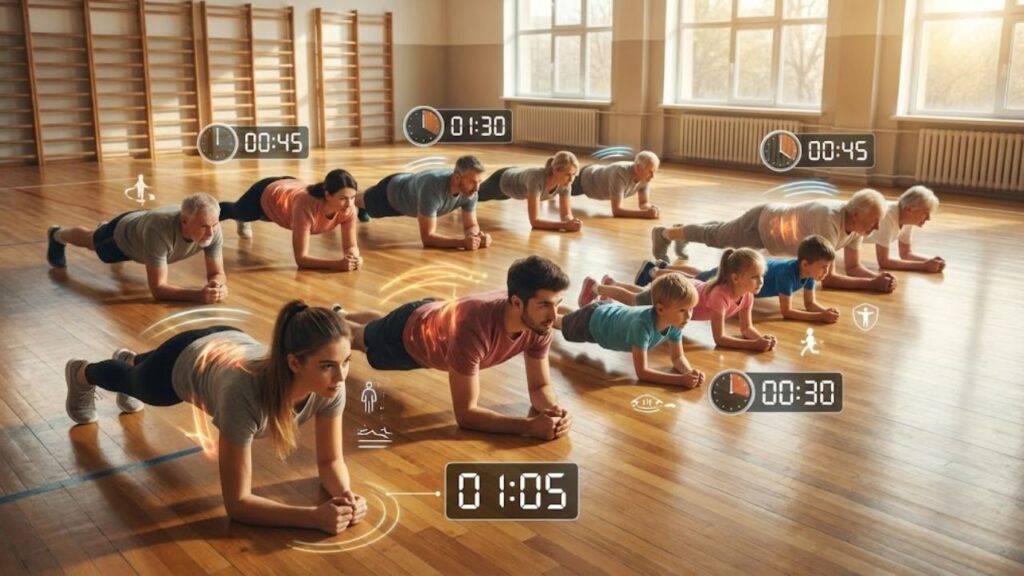
Unlike noisy & intense workouts planks are quiet exercises. You arrange your body in one straight line with your shoulders positioned above your elbows or wrists while your heels extend backward & your head stays naturally aligned. The movement looks easy from an outside view but your body works hard internally. Your deep core muscles activate as the transverse abdominis tightens around your midsection while the multifidus supports your spine. Your diaphragm matches your breathing with physical effort and your pelvic floor provides stability from below. The quality of your form is more important than how long you hold the position. A twenty-second plank with proper alignment delivers better core activation & remains safer than a one-minute plank where your form breaks down.
 8-minute chair series after 60 restores hip strength better than squats and improves balance
Why Longer Planks Don’t Mean Better Results
Fitness culture tends to celebrate extreme achievements like two-minute holds and viral endurance challenges that push bodies to their limits. However holding a plank for a long time mainly teaches you to tolerate discomfort rather than building real strength. Shorter planks performed with good form & done regularly actually deliver better results for your spine and core muscles. Extended planks are not necessarily dangerous but they offer less value over time and tired muscles can lead to poor form. Eventually the question changes from asking how long you can hold a position to asking how effectively you can support your body right now.
 Everyday exercises after 60 shrink stomach overhang faster than long cardio and feel easier
How Plank Technique Changes With Age
Plank Hold Times for Aging Bodies As you get older your body takes longer to recover & your tissues lose some of their resilience. A plank exercise that used to feel easy might now require more focused effort because balance and coordination naturally change with age. Using flexible time ranges lets you match how long you hold the position with how well you can maintain proper form. The key is to stop right before your body alignment begins to break down. Here are some general guidelines for healthy adults when performing planks.

Your 40s: Focus, Control, and Alignment
Planking in Your 40s: Finding Your Sweet Spot When you reach your 40s your body starts sending different signals than it did before. Old injuries that seemed forgotten might remind you they exist. Your joints feel less forgiving after a hard workout. The good news is that your strength hasn’t disappeared. It just needs a smarter approach. Planks remain one of the best core exercises you can do. They build stability without putting stress on your spine. But the question everyone asks is how long should you actually hold one.
Your 50s, 60s, and Beyond: Strong, Safe, and Sustainable
As you get older your muscles change along with your balance and how quickly your body recovers from exercise. But planks still work well for building strength. Holding a plank for just ten to thirty seconds is enough to see benefits. You can also try easier versions like doing planks on your knees or with your hands on a raised surface. Every second you hold the position helps make your core stronger and improves your posture. This makes you feel more confident when you move around and helps you stay independent in your daily activities. The key is to challenge yourself without overdoing it or risking injury.
Using Planks to Support Daily Movement
Planks work best when you keep them simple. Short regular holds before your morning coffee or after work add up to real core strength over time. The aim is not to set a time record but to notice better posture throughout your day & move more easily with greater confidence in what your body can do. When you stop as soon as your form starts to break down you protect yourself from injury while getting better results. Regular focused practice builds a strong core that helps you move through daily life with more strength and comfort.
