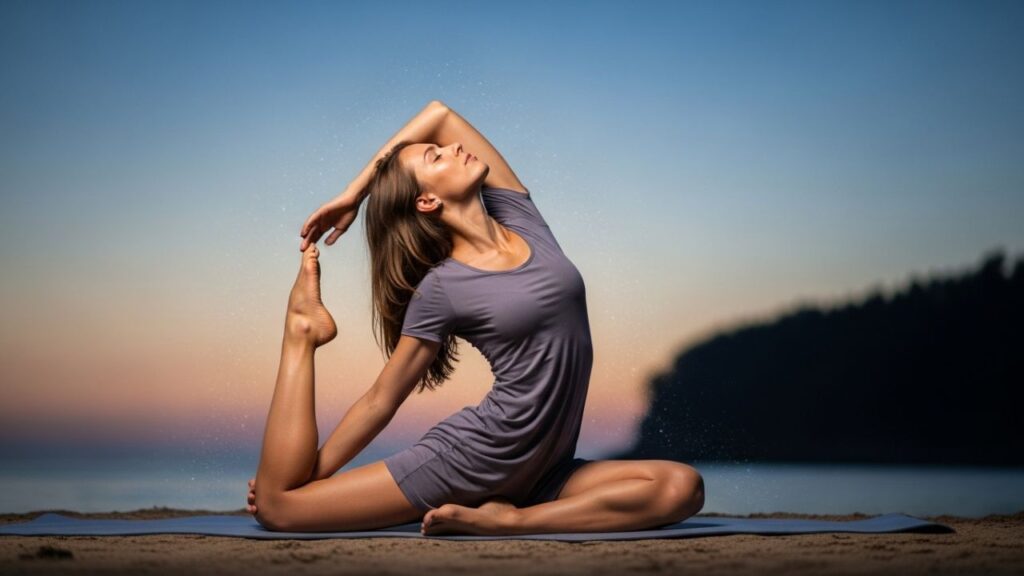
Ending a busy day with a short yoga routine can help you unwind when your mind feels restless or your muscles are tight. This practice isn’t designed to be a workout, but rather a gentle way to signal your body that it’s time to rest. These five beginner-friendly poses require no special flexibility and work best when paired with slow, mindful breathing and a calm environment. Start by kneeling for Child’s Pose, letting your body settle into the mat and your mind release the day’s tension.
Preparing Your Body and Sleep Space
Sleep arrives more naturally when your body feels loose and your mind slows down. Gentle yoga stretches hips, shoulders, and spine while controlled breathing cues your nervous system to relax. Think of it as dimming the lights on a hectic day. The selected poses are low-effort and can be held comfortably for longer periods, making them ideal for preparing both body and mind for rest. Creating a quiet, supportive space around you enhances their calming effect.

Why Yoga Enhances Sleep Quality
Falling asleep is easier when your body is calm and your mind is no longer on high alert. Simple yoga poses relieve tension in the lower back, neck, and shoulders, while steady breathing encourages a relaxed nervous system. These gentle, low-intensity stretches allow your body to gradually let go of daily stress. Holding poses for longer periods helps signal that the day is ending, creating the perfect transition into deep, restorative sleep.
 Awake Look Hack: The Simple Eyebrow Technique Makeup Artists Use to Instantly Brighten the Face
Pose 1: Child’s Pose (Balasana)
Child’s Pose gently resets your back and hips while soothing your nervous system. Kneel on the floor and bring your big toes together, spreading your knees comfortably apart. Lean forward until your forehead touches the mat or a pillow. Extend your arms forward for a gentle stretch or rest them alongside your body for a more enclosed feeling. Focus on calming the mind and lengthening the spine as you breathe slowly.

Pose 2: Legs Up the Wall (Viparita Karani)
This pose is ideal for relieving heavy legs and end-of-day swelling. Sit sideways against a wall and swing your legs up as you gently lie back. Keep hips near the wall or slightly away, using a folded blanket under the hips if extra support is needed. Rest your arms on your belly or by your sides. Stay here for 3 to 8 minutes, softly counting your exhalations if thoughts arise. Its soothing repetition helps calm the mind and prepare your body for sleep.
Pose 3: Reclining Bound Angle (Supta Baddha Konasana)
This pose opens the hips and relaxes the stomach muscles, making it particularly comforting after dinner. Lie flat on your back, press the soles of your feet together, and allow your knees to fall outward. Support your knees with pillows or folded towels to prevent any strain. Place one hand on your chest and the other on your stomach. Hold for 2 to 5 minutes, letting your breath expand naturally and keeping your jaw and tongue relaxed to encourage a full state of calm.

Pose 4: Supine Twist (Supta Matsyendrasana)
A gentle twist eases lower back tension and promotes relaxation. Lie on your back, pull your knees toward your chest, then let them fall to one side while stretching your arms in a T shape. Turn your head to the opposite side if comfortable. Hold for 1–2 minutes per side, breathing deeply into the ribs and sides of your body. Use pillows for support if your knees don’t reach the floor. Prioritizing comfort over depth ensures the pose enhances relaxation without strain.
Pose 5: Supported Corpse Pose (Savasana)
Savasana allows your body to absorb the benefits of your practice fully. Lie flat on your back with a pillow under your knees and a light blanket over you. Cover your eyes if your mind keeps racing. Hold this position for 3 to 10 minutes, practicing gentle breathing: inhale for 4 counts, exhale for 7. Modify the timing if needed to stay comfortable. Turn onto your right side before sitting up, letting your body integrate calm gradually.
A Simple Bedtime Flow
Try this sequence: Child’s Pose for 2 minutes, Legs Up the Wall for 5 minutes, Reclining Bound Angle for 3 minutes, Supine Twist for 2 minutes each side, and Supported Savasana for 3–5 minutes. If time is limited, just performing Legs Up the Wall and Savasana can be enough to shift your mood and prepare your body for rest. Consistency is key for signaling the end of your day.
Habits to Boost Sleep Benefits
Yoga supports sleep, but environment and routine matter too. Avoid caffeine in the afternoon and evening, dim screens during the last hour before bed, and limit stimulating content. When your mind is busy, jot down a short worry list with one actionable step, then set it aside. Practice nose breathing during poses, keep your room quiet, and repeat this routine most nights for two weeks to help your body associate it with rest. Customizing timing and props can further improve outcomes for specific sleep challenges.