In the calm of a café restroom, a young woman refreshes her lips without drawing attention. The routine is understated: two soft strokes of liner, a gentle press together, and a sheer sweep of gloss. There is no harsh overlining or crisp edges. Yet when she glances up, her lips look smooth and rested, naturally full, as if she has just paused to breathe. Nothing feels obvious, but the change is unmistakable.
The Lip Liner Placement Detail You Notice Later
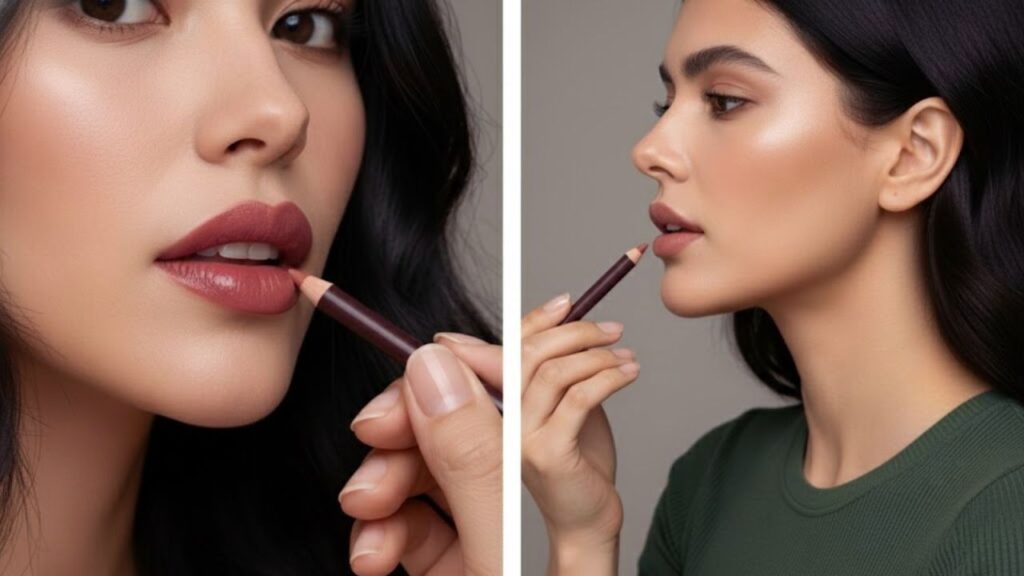
Later, standing in front of your own mirror, you try to recreate the same effect. You use the same pencil, the same gloss, even mimic her relaxed expression. Still, something feels off. Your lips look fine, but they appear flat. That is when it becomes clear the difference was never about the product itself. It was where the liner sat. A barely noticeable shift in placement completely alters the outcome.
Moving Beyond the Idea of Bigger Lips
This technique is not about creating dramatically larger lips. Instead, it subtly guides where the eye rests. Traditional habits often involve tracing outside the lip line and filling everything in. While that approach once worked, it can feel disconnected in everyday light. Heavy overlining may look striking in photos, but up close it often clashes with natural facial balance.

A Modern Approach to Lip Application
Today, many makeup artists are stepping away from obvious enhancement. Rather than forcing the illusion of size, they focus on structure and restraint. The fullness that stands out is not pushed aggressively; it appears naturally through thoughtful placement. This is why the method works just as well in selfies, video calls, and real-life moments. The finish remains soft yet polished.

Why Precision Matters More Than Bold Lines
The real transformation happens in millimetres, not dramatic outlines. Once you understand the true placement of liner, the process feels entirely different. The goal is not to redraw your lips, but to highlight their existing shape. This level of precision keeps the result believable, gently enhanced, and free from harsh definition.
Where Professionals Actually Apply Lip Liner
A closer look at professional techniques reveals a consistent pattern. Artists avoid sharply defining the corners. Instead, they focus on three areas: the cupid’s bow peak, the center of the lower lip, and the soft pads just off-center. The outer edges stay diffused, creating an outline that feels more like a suggestion than a strict border.

Why the Result Feels Effortless
A London-based makeup artist once shared that she uses the same affordable lip pencil on every client. The difference comes from how she adjusts placement based on light and individual lip shape. Clients often assume cosmetic treatments are involved. Her answer is always the same: precise liner placement. Most are told they look well-rested and naturally balanced.
The Visual Logic Behind the Illusion
The human eye does not scan faces evenly. It is drawn to contrast and subtle curves. The dip of the cupid’s bow, the curve at the center of the lower lip, and spots where gloss catches light naturally pull attention. Enhancing these points while keeping the corners soft allows lips to appear fuller without revealing a strong outline.
A Simple Technique for Natural Soft Fullness
Start with dry lips and a relaxed mouth. Choose a sharpened nude liner close to your natural shade. Lightly connect the peaks of the cupid’s bow with a short line just above the dip. Move to the center of the lower lip and draw a small arc slightly outside the line, no wider than your iris. Leave the outer areas mostly untouched. Blend gently with a fingertip and apply gloss only at the center. Restraint keeps the look real.
Why This Method Works for Everyday Life
This soft-focus approach feels less like armor and more like enhancement. Small imperfections melt into the overall look, making it forgiving on rushed mornings or uncertain days. In changing light, lips stay defined at the center and soft at the edges, moving naturally with expression. It is makeup designed for real, unfiltered faces, not frozen images.