
1. Supported Child’s Pose (Balasana)
- Begin by kneeling on the floor with your big toes touching and knees wide apart.
- Place a bolster or pillow between your knees for support.
- Sit back onto your heels, then gently lower your chest toward the floor.
- Rest your forehead on the mat or a block, and extend your arms forward or alongside your body.
- Take deep breaths, feeling the gentle stretch in your back and hips.
Benefits:
This pose promotes gentle spinal flexion, relieves tension in the back and neck, and encourages deep breathing. It is an excellent pose for calming the mind and easing stress.
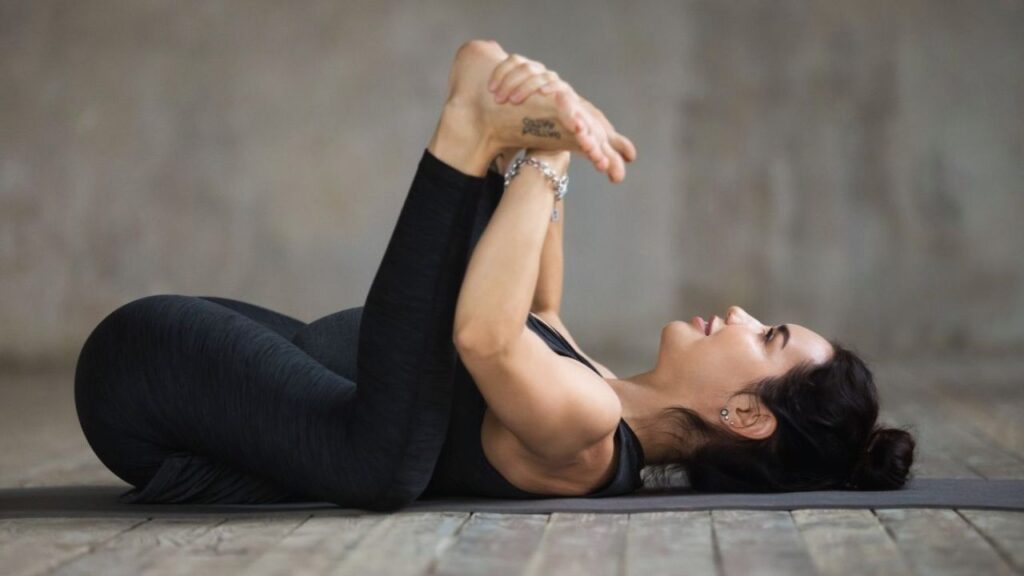
2. Reclining Bound Angle Pose (Supta Baddha Konasana)
- Lie on your back and bring the soles of your feet together, allowing your knees to fall out to the sides.
- Place a bolster or pillow under your spine for additional support.
- You can also place a block or cushion under your knees for extra comfort.
- Let your arms rest by your sides or place them on your abdomen.
- Close your eyes and focus on your breath, allowing your body to sink into the support.
Benefits:
This pose gently stretches the inner thighs, groin, and hips while releasing tension in the lower back. It also opens the chest and promotes a sense of calm.

3. Supported Legs-Up-the-Wall Pose (Viparita Karani)
- Sit next to a wall and lie down on your back, bringing your legs up the wall.
- Place a bolster or pillow under your hips for added support.
- Keep your legs straight and your feet flexed, with your arms extended at your sides.
- Relax your head and neck, allowing your body to soften into the floor.
- Close your eyes and breathe deeply, holding the pose for several minutes.
Benefits:
Legs-up-the-wall pose helps to relax the body by reversing the flow of blood and promoting lymphatic drainage. It’s especially beneficial for relieving leg fatigue, reducing anxiety, and calming the nervous system.

4. Supported Savasana (Corpse Pose)
- Lie flat on your back with your legs extended and your arms by your sides.
- Place a bolster or cushion under your knees to relieve pressure on your lower back.
- Put a blanket or small pillow under your head for support.
- Allow your body to melt into the floor, letting go of any tension.
- Focus on your breath, letting the natural rhythm of your inhalations and exhalations guide you into relaxation.
Benefits:
Savasana is the ultimate relaxation pose, providing time for the body to integrate the benefits of your practice. It reduces stress, improves sleep, and enhances your overall sense of well-being.

5. Supported Fish Pose (Matsyasana)
- Lie on your back with your legs extended and a bolster placed under your upper back, supporting the curve of your spine.
- Allow your head to gently drop back, and place your arms by your sides or extend them overhead for added length.
- Relax your legs and breathe deeply, focusing on the sensation of the chest opening.
- Keep your body in a relaxed and comfortable position, allowing gravity to do the work.
Benefits:
Fish Pose opens the chest, stretches the back, and improves posture. It’s also beneficial for calming the nervous system and reducing feelings of stress.
FAQ
Q1: How long should I hold each restorative yoga pose?
A1: In restorative yoga, the goal is to stay in each pose for an extended period of time, typically 5 to 15 minutes. This allows the body to fully relax and release any tension. However, always listen to your body and adjust the duration based on your comfort level.

Q2: Can I practice restorative yoga every day?
A2: Yes, restorative yoga can be practiced daily. It’s a gentle and supportive form of yoga that promotes deep relaxation and stress relief, making it suitable for daily practice, especially if you’re looking to unwind and soothe your nervous system.
Q3: What props do I need for restorative yoga?
A3: Common props used in restorative yoga include bolsters, blankets, pillows, and yoga blocks. These props help support your body in various poses, allowing you to relax deeply without strain. If you don’t have specific props, you can also use household items like cushions and towels.
Q4: Is restorative yoga suitable for beginners?
A4: Yes, restorative yoga is perfect for beginners. It focuses on gentle stretches, deep breathing, and relaxation, making it an accessible practice for people of all levels, including those new to yoga.
Q5: Can restorative yoga help with anxiety and stress?
A5: Absolutely. Restorative yoga is known for its ability to activate the parasympathetic nervous system, which helps the body relax and counteract the effects of stress. Regular practice can significantly reduce anxiety and promote a sense of calm.
