
The first time a patient took out a dented blue tin of Nivea Crème from their bag they handled it with the same care that some people show toward expensive serums. The tin opened with a click & the thick white cream looked bright under the harsh clinic lights. The familiar powdery scent brought back memories of countless grandmothers’ bathrooms.
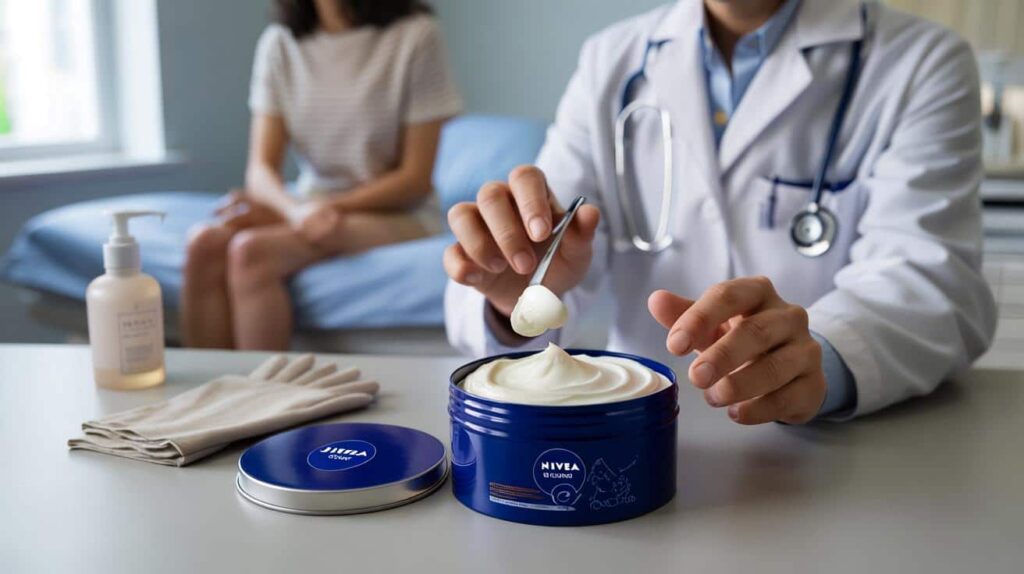
In that moment, I realised I was up against more than a moisturizer. I was up against childhood memories, family rituals, and the feeling of “this has always worked for us”.

And what I found was not quite what most people expect.

Nivea’s blue tin: what’s really inside that legendary cream?
Let’s start with the atmosphere around this product. Nivea Crème in the blue tin is not just a cream, it’s a character in many people’s lives. It lives in bathrooms, handbags, bedside tables, in that random kitchen drawer with scissors and old batteries.

For some of my patients, it’s their answer to everything: dry hands, cracked heels, winter cheeks, even eye cream “on days I’m tired”. There’s a strange security in that thick, slightly sticky texture. It feels old-school, serious, like something that won’t evaporate in two minutes and leave you wondering if you really put anything on.
A woman in her fifties told me she had been using the blue Nivea cream since she was fourteen years old. Her mother had used it and her grandmother had used it as well. She said none of them had wrinkles and she seemed partly joking but also partly serious when she told me this. She applied it as a night cream on her face and also put it on her neck and hands. When she mentioned that she had recently purchased an expensive hyaluronic serum just to test it out she seemed to feel almost guilty about it.
When we did a basic skin assessment her skin was actually in good shape. It was a bit dehydrated and a bit congested in certain areas but it was protected and resilient. That is the sort of story that makes people say they were right. They claim it works and that dermatologists overcomplicate everything.
So what does the formula say when we strip the nostalgia away? Nivea Crème is a classic water-in-oil emulsion. That means an oily outer phase that traps water inside. The texture comes mainly from mineral oil (paraffinum liquidum), petrolatum, and waxes. These ingredients are occlusive: they sit on the surface and reduce water loss from the skin.
From a purely technical standpoint, it’s a very efficient barrier cream. Not fancy, not “clean beauty”, not natural. Just an old, robust, laboratory-style design, created long before marketing terms like “microbiome” and “glass skin”.
➡️ Meteorologists warn that an unusually sharp temperature plunge could reshape winter storm patterns across multiple regions
➡️ Heavy snow is set to begin tonight as authorities urge drivers to stay home, even while businesses push to operate as usual
# Say Goodbye to Gray Hair with This Simple Two Ingredient Homemade Dye
Gray hair is a natural part of aging that many people experience as they get older. While some embrace their silver strands with pride, others prefer to maintain their original hair color for as long as possible. Commercial hair dyes are widely available but they often contain harsh chemicals that can damage your hair & scalp over time. These products may also cause allergic reactions or unwanted side effects in some people. If you are looking for a natural alternative to cover your gray hair, you might be interested in trying a homemade dye that requires only two simple ingredients. This natural solution has been used for generations in various cultures around the world. The best part is that you probably already have these ingredients in your kitchen right now.
## The Two Main Ingredients
The homemade dye recipe uses coffee and henna as its primary components. Coffee is rich in antioxidants and can help darken your hair naturally while adding shine and depth to your existing color. Henna is a plant-based dye that has been used for centuries to color hair and skin. It provides a reddish-brown tint that can effectively cover gray strands while conditioning your hair at the same time.
## How Coffee Works on Gray Hair
Coffee contains natural pigments that can temporarily stain your hair and make gray strands less noticeable. The caffeine in coffee may also stimulate hair growth and improve the overall health of your scalp. When you apply coffee to your hair regularly, it gradually builds up color and creates a darker appearance. This method works best for people with brown or black hair who want to cover a small amount of gray.
## The Benefits of Using Henna
Henna is a completely natural dye that comes from the leaves of the henna plant. Unlike chemical dyes that strip your hair of its natural oils henna actually coats each strand and protects it from damage. It adds volume & thickness to your hair while providing a beautiful reddish tone. Henna is also known for reducing dandruff and promoting a healthy scalp environment.
## Preparing Your Homemade Hair Dye
To make this natural dye, you will need to gather your ingredients and prepare them properly. Start by brewing a strong pot of coffee using about three tablespoons of ground coffee per cup of water. Let the coffee cool down to room temperature before using it. Next, take about half a cup of henna powder and place it in a glass or ceramic bowl. Never use metal bowls when working with henna because the metal can react with the dye and affect the final color. Pour the cooled coffee into the bowl with the henna powder & mix everything together until you get a smooth paste. The consistency should be similar to yogurt or pudding. If the mixture is too thick, you can add more coffee to thin it out. If it is too runny, add a bit more henna powder until you reach the right texture.
## Application Process
Before applying the dye to your entire head, it is smart to do a patch test on a small section of hair. This will help you see how the color turns out and make sure you do not have any allergic reactions to the ingredients. Once you are ready to proceed wash your hair with a gentle shampoo and towel dry it until it is slightly damp. Put on old clothes or wrap a towel around your shoulders because this dye can stain fabric. Apply petroleum jelly or coconut oil along your hairline and ears to prevent staining your skin. Using gloves to protect your hands start applying the mixture to your hair in small sections. Begin at the roots where gray hair is most visible and work your way down to the ends. Make sure every strand is completely covered with the dye mixture. Once your entire head is covered, gather your hair and secure it with a clip. Cover your hair with a shower cap or plastic wrap to keep the dye from drying out too quickly.
## Waiting Time and Results
The longer you leave the dye in your hair the more intense the color will be. For subtle results, leave the mixture on for about two hours. If you want a deeper and more dramatic color, you can leave it on for up to four hours. Some people even leave henna dye on overnight for maximum color intensity. During the waiting period, the dye may feel heavy on your head and you might notice a slight earthy smell from the henna. This is completely normal & the smell will fade once you rinse out the dye. You can pass the time by reading a book or watching your favorite show while the dye works its magic.
## Rinsing and Aftercare
When the waiting time is over, rinse your hair thoroughly with lukewarm water. Do not use shampoo right away because this can strip away some of the color before it has fully set. Keep rinsing until the water runs clear and all traces of the dye mixture are gone. This may take several minutes because henna can be quite thick and sticky. After rinsing you can apply a natural conditioner to help detangle your hair and add extra moisture. Let the conditioner sit for a few minutes before rinsing it out. Gently squeeze excess water from your hair & wrap it in a clean towel. Avoid using a hair dryer right away because the heat can affect how the color develops.
## Maintaining Your New Color
The color from this homemade dye will gradually fade over time with regular washing. To maintain your results, you can reapply the dye every three to four weeks. Some people find that the color actually improves with repeated applications as the natural pigments build up on their hair strands. Between dye applications, use sulfate-free shampoos & conditioners to help preserve your color. Washing your hair with cold water instead of hot water can also help the color last longer. Limit your use of heat styling tools because excessive heat can cause the color to fade more quickly.

## Additional Tips for Best Results
If you want to adjust the final color, you can experiment with the ratio of coffee to henna. Using more coffee will give you darker brown tones while using more henna will create redder highlights. You can also add other natural ingredients to customize your dye mixture. For example, adding a tablespoon of lemon juice can help the dye penetrate your hair better and create a brighter color. A spoonful of yogurt can make the mixture easier to apply & add extra conditioning benefits. Some people also add essential oils like rosemary or lavender for a pleasant scent and additional hair health benefits.
## Who Should Try This Method
This natural dyeing method works well for people who have light to moderate gray coverage needs. It is especially effective for those with brown or black hair who want to enhance their natural color while covering gray strands. The results may vary depending on your original hair color and texture. People with very light blonde hair might find that this dye creates an orange or brassy tone rather than covering gray effectively. In such cases, you might need to adjust the recipe or consider other natural alternatives. Always remember that natural dyes produce more subtle results compared to chemical dyes and may require multiple applications to achieve your desired look. This homemade hair dye offers a safe and affordable way to address gray hair without exposing yourself to harsh chemicals. Give it a try and see how this simple two ingredient solution can help you maintain your preferred hair color naturally.
➡️ People in their 60s and 70s were right all along: 7 life lessons we’re only now beginning to understand and appreciate
➡️ Frost traps for squirrels: Expert explains why your help is urgently needed
➡️ It’s confirmed and official : heavy snow expected starting late tonight authorities urge caution
➡️ Official and confirmed: heavy snow is set to begin late tonight, with alerts warning of major disruptions, dangerous conditions, and widespread travel chaos
➡️ It took just two seconds for China to shatter a Hyperloop world record, a breakthrough that could redefine the future of high-speed trains
Good, bad, or somewhere in the middle? A dermatologist’s honest verdict
If you open the formula with a professional eye, the first things you see are the occlusives. Mineral oil, petrolatum, microcrystalline wax. These don’t “nourish” the skin in the romantic sense, they protect it physically. They form a film that reduces transepidermal water loss, which is just a complicated way of saying: your skin loses less water to the air.
Does it provide hydration? In an indirect way it does. However the cream does not actually introduce large amounts of water into your skin. Instead it mainly traps the moisture that already exists there. You should think of it as working more like a protective coat rather than a nutritious green juice.
Then come the humectants and emollients. Glycerin, a classic, pulls water into the top layers of the skin. Some fatty alcohols and lipids soften and smooth the surface. There’s also panthenol in some versions, which can soothe. But you won’t find trendy actives here: no vitamin C, no retinol, no niacinamide.
Nivea Crème is not a treatment cream. It doesn’t target dark spots, acne, or sagging. It’s a basic, functional moisturizer. That’s part of its charm and its limit at the same time.
Then we hit the ingredients that spark debates: fragrance, preservatives, and the much-criticised mineral oils. As a dermatologist, I don’t demonize mineral oil by default. It’s highly purified in cosmetics, stable, non-irritating for many people, and very effective for barrier repair. Where problems can arise is in acne-prone, very oily, or very reactive skin. The texture can feel suffocating, and in some, it may contribute to clogged pores.
The fragrance, that nostalgic Nivea smell, is another story. For those with sensitive or eczema-prone skin, fragrance sits high on the list of things that can trigger irritation. *That doesn’t mean everyone will react, but it’s not a neutral detail either.*
Who can really use Nivea blue cream… and how?
Here’s the plain-truth sentence: Nivea blue tin is much better as a body cream than as a daily face cream for most people.
On dry elbows, shins, heels, hands that are raw from washing or winter wind, it shines. Apply it on slightly damp skin after a shower, when your skin still has some water on the surface. Warm a small amount between your hands first, then press and glide it on. It will feel dense at first, then slowly melt and create that protective film.
Used this way, it behaves like a solid winter coat for your skin barrier.
On the face, the story changes. For very dry, non-acne-prone, non-sensitive skin, used occasionally at night, it can act like an emergency mask. But if you’re acne-prone, combo-oily, or have rosacea or eczema on your face, this thick, occlusive cream can be too much. It may trap sweat, sebum, bacteria, and irritants closer to the skin.
Many people rub their skincare products in too hard because they think this helps the product work better. This aggressive rubbing can damage small blood vessels under the skin and make irritated skin even worse. It creates a red and shiny appearance that looks tight and uncomfortable. The better approach is to apply products gently by tapping or smoothing them onto your face instead of scrubbing.
I tell my patients that Nivea Crème is neither bad nor magical. Think of it as a tool. What matters is choosing the correct tool for the specific surface and using it at the appropriate moment.
- Great uses for Nivea blue cream
Overnight hand mask with cotton gloves, on cracked heels with socks, on dry shins in winter, as a protective layer on hands before cleaning or dishwashing. - Uses I only recommend selectively
Occasional night “slugging-style” layer on the face, but only for very dry, non-acne-prone skin and for a short period (for instance, after a harsh ski weekend or illness). - Uses I’m cautious about
Daily facial moisturizer for oily or acne-prone skin, eye cream for sensitive eyelids, or layered over strong actives like retinoids for people who tend to clog easily. - Smart pairing ideas
Lighter hydrating serum underneath, then a thin veil of Nivea to trap that hydration, especially on the body or on very dry cheeks. - Red flags to watch
Burning, itching, new small bumps, more blackheads, or persistent redness after using it on the face. That’s your cue to stop and rethink.
So… should you keep your blue tin or throw it away?
The real answer depends on what you want from it. If you think this cheap and famous cream will take the place of a proper skincare routine & fix aging skin and dark spots and clear up acne then you are expecting too much. The cream was never made to do those things. You will almost certainly end up disappointed.
If you treat it like a simple, old-fashioned barrier cream for dry patches, hands, body, and the occasional SOS moment, it suddenly becomes much more reasonable. Even lovable.
We have all experienced that moment when a product makes us think of someone we loved and we keep it just for that reason. The Nivea blue tin exists in that emotional space for many people. That is acceptable as long as we do not mistake emotion for evidence.
You are allowed to enjoy the smell, the texture, the ritual, while still protecting your skin with formulas that are better tailored to its needs today, not fifty years ago.
We don’t have to cancel this cream or crown it as a miracle. There’s a middle road where it keeps its place on the shelf, just not on a pedestal. Maybe it moves to your nightstand as a hand and foot savior. Maybe it leaves your face and stays on your legs. Maybe you pass it on to someone who loves that heavy, comforting glide.
Your skin reveals more truth than any advertisement or childhood memory can offer. It tells you more than what your dermatologist might suggest during a quick appointment. The key is learning how to pay attention to what it says. Marketing campaigns promise miracles in bottles. Nostalgia makes you reach for the same products your mother used. Dermatologists often recommend treatments based on general guidelines. But your skin responds in its own unique way to everything you put on it. When a product irritates your face it sends immediate signals. Redness appears within hours. Tightness develops after washing. Small bumps emerge where your skin protests against an ingredient it cannot tolerate. These reactions tell you something important that no advertisement will mention. Your skin also communicates when something works well. It feels comfortable throughout the day. The texture becomes smoother over several weeks. That persistent dry patch finally disappears. These positive signs matter more than any celebrity endorsement or fancy packaging. Learning this language takes time and attention. You need to observe how your skin behaves after using a new product for at least two weeks. Notice whether your face feels different in the morning compared to the evening. Pay attention to which areas improve and which ones struggle. The process requires patience because skin changes happen gradually. A serum might take a month to show real benefits. A cleanser might seem fine initially but cause problems after repeated use. Your skin writes these messages slowly across days and weeks. Trust what you see & feel on your own face. Your skin knows what it needs better than any expert who sees you for fifteen minutes. It understands which ingredients help and which ones harm. This knowledge comes from direct experience rather than theory or trends. Start paying closer attention today. Your skin has been trying to tell you something all along.
| Key point | Detail | Value for the reader |
|---|---|---|
| Formula is highly occlusive | Based on mineral oil, petrolatum, and waxes that reduce water loss | Helps you decide when it’s great (very dry areas) and when it can feel too heavy |
| Best for body, not everyday face | Performs well on hands, feet, elbows, shins; more risky on acne-prone or sensitive faces | Avoids breakouts and irritation while still benefiting from its strengths |
| Fragrance and texture matter | Iconic scent and thick feel are pleasant for some, triggering for others | Lets you match the product with your personal tolerance and comfort level |
FAQ:
- Is Nivea blue tin safe for the face?For many people, yes, but I don’t recommend it as a daily facial cream for everyone. It can be fine on very dry, non-acne-prone skin as an occasional night mask, while oily or sensitive skin types may react with clogged pores or irritation.
- Does Nivea Crème cause acne?It’s not formulated to be comedogenic on purpose, but its very occlusive texture can contribute to clogged pores in acne-prone skin. If you notice more blackheads or pimples after using it on your face, it’s not the right match for you.
- Is mineral oil in Nivea harmful?Cosmetic-grade mineral oil is highly purified and, in dermatology, often used in sensitive-skin products. The problem is less “toxicity” and more texture and occlusion: it can feel too heavy or suffocating for some skin types.
- Can I use Nivea blue cream as an eye cream?I’m cautious about this. The eye area is thin and often sensitive, and the fragrance plus heavy texture can lead to irritation or milia (tiny white bumps) in some people. A lighter, fragrance-free eye product is usually safer.
- Is the blue tin good for anti-aging?It protects the barrier and can reduce dehydration, which indirectly softens the look of fine lines. But it doesn’t contain proven anti-aging actives like retinoids or certain peptides. Think of it as a comfort cream, not a full anti-aging treatment.
